When the oil starts shimmering, the salmon needs a little patience: set it in the skillet and leave it alone while the first side sears. Moving it too soon can tear the surface, especially with skinless fillets. I learned to let the pan do its work, then turn the fish once and finish cooking it before the sauce goes in. That simple order gives this Tuscan Salmon with Parmesan Cream Sauce browned edges without overcooking the center.
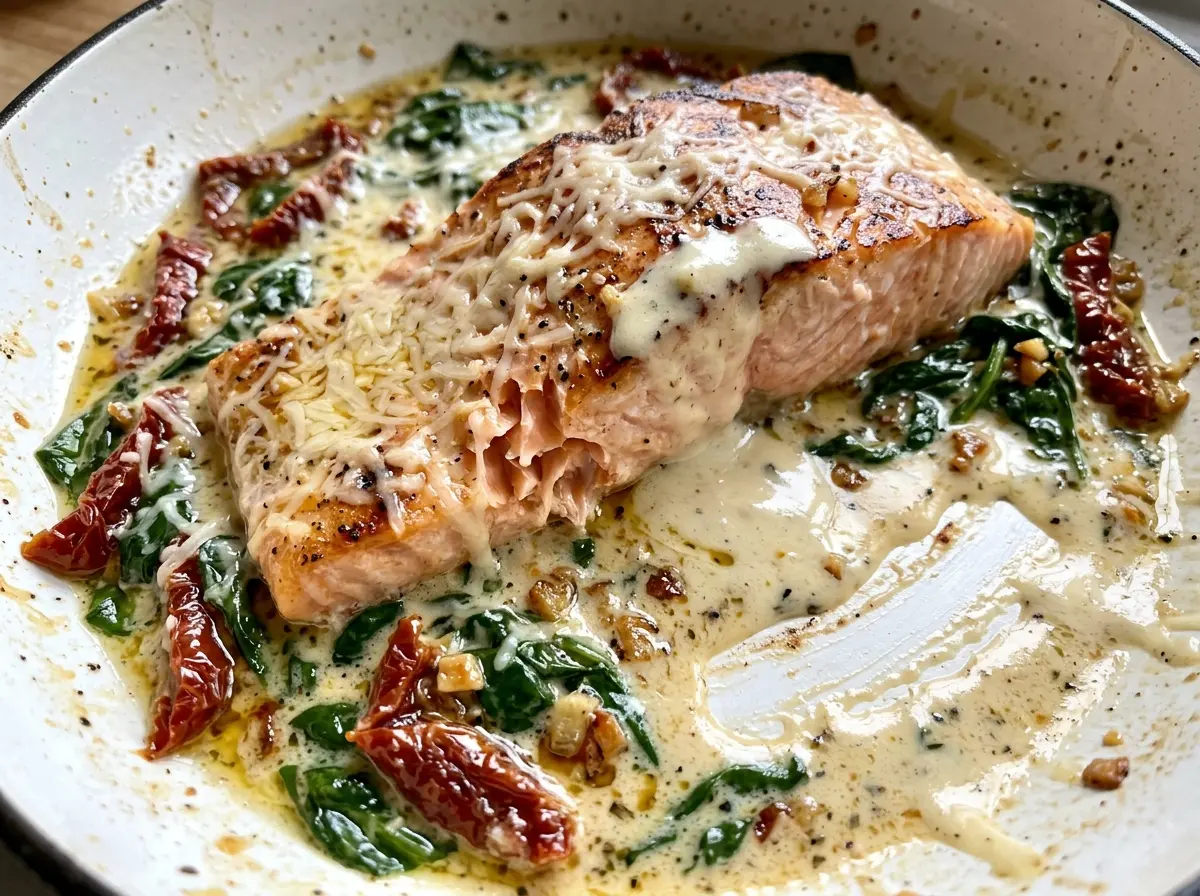
The sauce builds in the same skillet, so the browned bits left from the salmon become part of the flavor instead of getting washed away. Chicken broth loosens them, and heavy cream turns the pan juices into a smooth base for sun-dried tomatoes, Parmesan, and spinach. I keep the heat gentle once the cream goes in; a quiet simmer thickens it without making the sauce feel heavy. Spoon it over the salmon while the spinach is just wilted and the Parmesan is still silky.
Kitchen Note
Finely grated Parmesan melts into the cream more smoothly than coarsely grated cheese. Keep the sauce at a gentle simmer as you stir it in; if it boils hard, the texture can turn grainy.
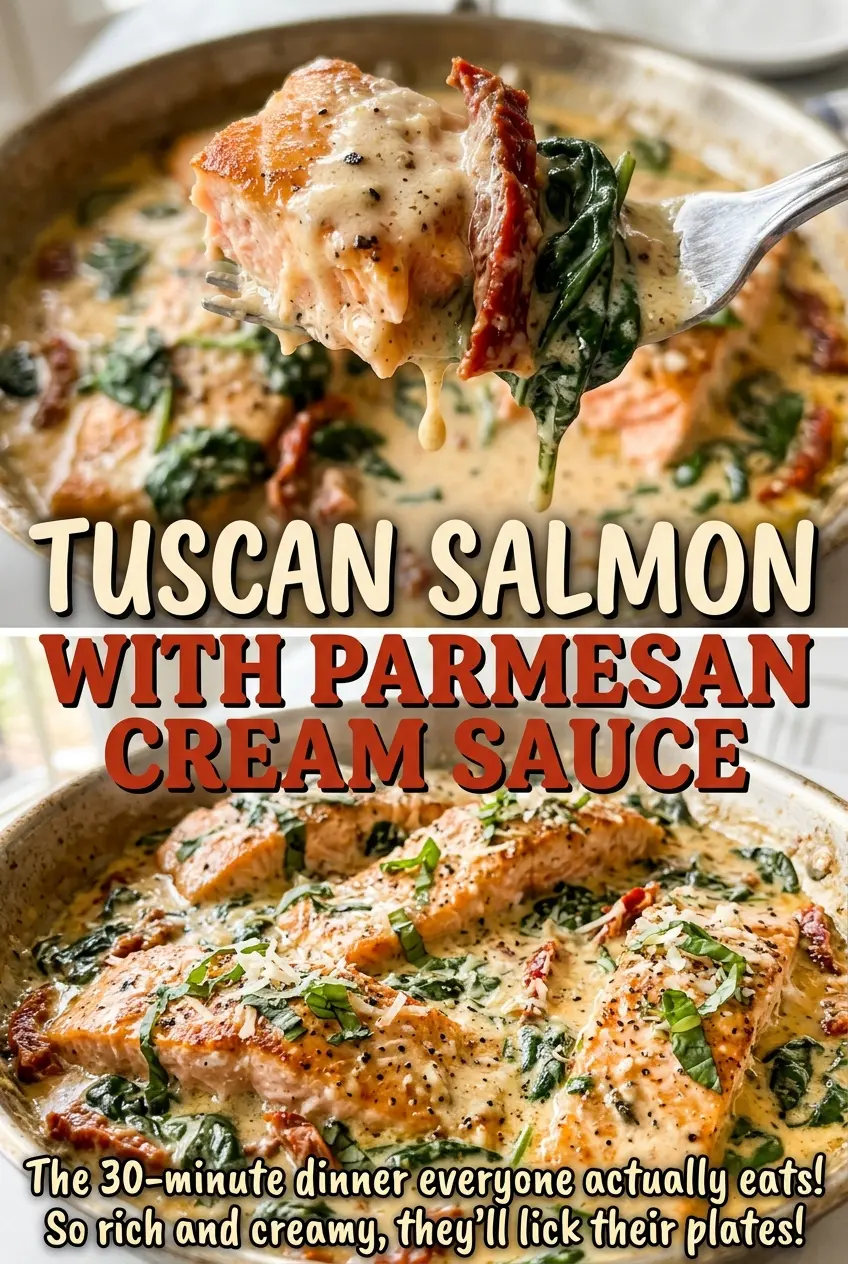
Save this Tuscan salmon for a skillet dinner with browned fillets, Parmesan cream, and sun-dried tomatoes.
Why the Best Part of the Salmon Sear Belongs in the Cream Sauce
A creamy sauce can taste flat when it starts with cream alone. Here, the salmon browns first, leaving a thin layer of savory bits in the skillet. The chicken broth loosens those bits after the tomatoes have had a minute in the pan, carrying that seared flavor into the sauce. Nothing extra is needed to make the cream taste connected to the fish.
That order also gives each ingredient a job. The broth lifts the browned residue, while the cream softens its intensity and gives the sauce body. Sun-dried tomatoes bring concentrated tang, and Parmesan adds a salty, savory finish. If the skillet looks a little messy after the salmon comes out, don’t wipe it clean; those browned traces are useful, not burnt scraps. The finished sauce should coat a spoon lightly, then cling to the salmon when you spoon it over the fillets.
What the Salmon, Tomatoes, and Parmesan Each Bring to the Skillet
- Skinless salmon fillets — Fillets about an inch thick cook evenly in the stated skillet timing. Choose pieces of similar thickness so they finish together, and pat the surface dry before seasoning; a wet surface steams instead of browning as readily.
- Oil-packed sun-dried tomatoes — Their concentrated, slightly tangy flavor stands up to the cream. Drain them before chopping so excess oil doesn’t make the sauce greasy, and use tomatoes packed in oil rather than dry-packed ones for the texture this sauce needs.
- Chicken broth — This loosens the skillet fond and keeps the sauce from tasting like cream alone. A broth you like drinking is a good choice here, since its flavor carries through the finished sauce.
- Heavy cream — The higher fat content gives the sauce body and helps it stay creamy through a gentle simmer. It isn’t interchangeable with a thin milk without changing how the sauce cooks and finishes.
- Finely grated Parmesan — Fine shreds melt into the cream quickly and distribute through every spoonful. Freshly grated cheese is a good pick when convenient; the useful detail is the fine texture, not an expensive wedge.
- Baby spinach and garlic — Baby spinach wilts quickly without needing extra prep beyond washing and drying it if needed. Mince the garlic before it hits the butter, because it cooks quickly and you want it fragrant rather than browned.
How to Sear the Salmon Before Building the Parmesan Sauce
Dry and Season Each Fillet
Pat both sides of the salmon dry, then season both sides with kosher salt and black pepper. Drying the surface helps the fish brown once it meets the hot oil. Keep the fillets close to the same thickness so their centers cook at a similar pace. Set the seasoned salmon beside the stove before you begin heating the skillet.
Let the First Side Brown Undisturbed
Heat olive oil in a 12-inch skillet over medium-high heat for about a minute, until it shimmers. Arrange the salmon in one layer, leaving room around the pieces rather than stacking or overlapping them. Cook for 4–5 minutes per side, checking the thickest part for 145°F before taking the fillets out. Transfer the cooked salmon to a plate and cover it loosely while you make the sauce.
Build a Tomato-Scented Cream Base
Reduce the heat to medium and add the butter, then stir in the minced garlic for about 30 seconds, until fragrant. Add the drained sun-dried tomatoes and cook them for a minute before pouring in the chicken broth. Scrape the skillet as the broth simmers for 2 minutes so the browned bits release into the liquid. Stir in the heavy cream and Italian seasoning, then let the sauce simmer gently for 2–3 minutes as it begins to thicken.
Wilt the Spinach and Finish the Fish
Stir in the Parmesan and spinach for 1–2 minutes, until the cheese melts and the leaves wilt. If the spinach still looks bulky, keep stirring gently until it softens into the sauce rather than turning the heat up. Return the salmon to the skillet and spoon sauce over each fillet. Warm everything gently for 1–2 minutes, then serve while the sauce is creamy and the spinach is bright.
Two Ways to Change the Shape of This Tuscan Salmon
Skip the spinach for a tomato-Parmesan sauce
Leave out the baby spinach and keep the rest of the skillet method the same. The sauce will read more clearly as cream, Parmesan, and sun-dried tomato, without the leafy texture; this is a useful change if you want a simpler finish rather than a vegetable-forward one.
Turn the fillets into a flaked salmon skillet
Cook the fillets whole first, then break them into large flakes before returning them to the finished sauce. The smaller pieces pick up more cream and tomato in each bite, though you lose the neat whole-fillet presentation. Fold gently so the salmon stays in generous pieces.
Storage and Reheating
- Refrigerator: Store leftovers in a covered container for 3–4 days. The spinach softens further, and the sauce thickens as it chills.
- Freezer: Freeze in an airtight container for up to 2–3 months. The salmon remains usable, but the cream sauce may separate and the spinach will be softer after thawing.
- Reheating: Warm gently in a covered skillet over low heat, spooning the sauce over the fish, until leftovers reach 165°F. Avoid a hard boil, which can make the cream sauce separate and dry out the salmon.
Questions That Come Up While Making Tuscan Salmon
Tuscan Salmon with Parmesan Cream Sauce
Ingredients
Equipment
Method
- Pat the salmon dry.
- Season both sides with the salt and pepper.
- Heat the olive oil in a 12-inch skillet over medium-high heat until shimmering, about 1 minute.
- Arrange the salmon in the skillet in a single layer.
- Cook for 4–5 minutes per side, until the thickest part reaches 145°F; transfer to a plate and loosely cover.
- Reduce the heat to medium, add the butter, and stir in the garlic; cook for about 30 seconds, until fragrant.
- Stir in the sun-dried tomatoes and cook for 1 minute.
- Pour in the chicken broth, scraping up any browned bits; simmer for 2 minutes.
- Stir in the heavy cream and Italian seasoning, then simmer gently for 2–3 minutes, until the sauce begins to thicken.
- Stir in the Parmesan and spinach for 1–2 minutes, until the cheese has melted and the spinach has wilted.
- Return the salmon to the skillet and spoon sauce over the fillets; warm gently for 1–2 minutes, then serve.