The skin gives the salmon a little extra support as it bakes, and the parchment keeps cleanup simple. When I make Greek salmon with dill sauce, I like how the bright lemon and oregano season the fish while a cool, tangy sauce waits in the refrigerator.
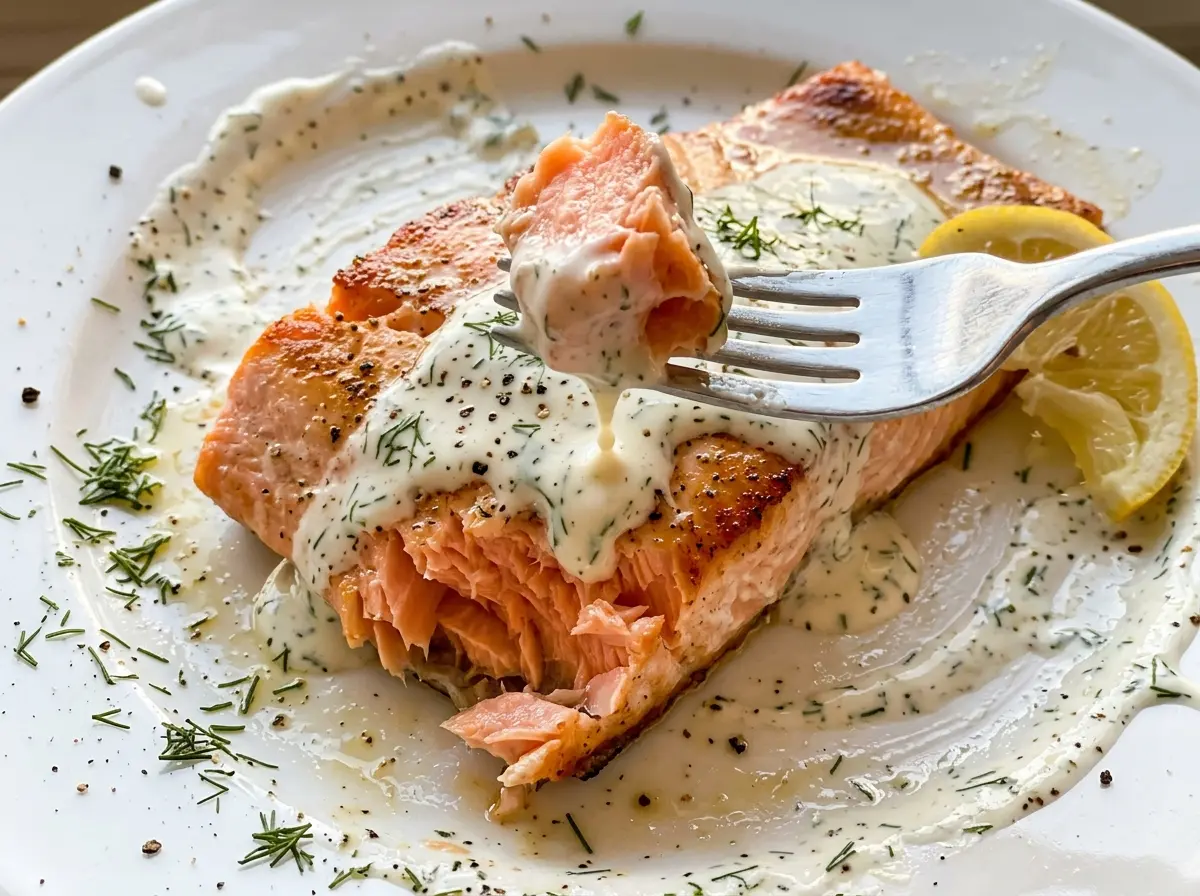
I mix the sauce first, then let the oven do the work. Keeping the salmon skin side down means there’s no need to flip a delicate fillet halfway through, and checking the thickest part gives you a much surer doneness cue than the clock alone. The finished fish flakes easily, with minced garlic and oregano tucked into the lemony surface; a spoonful of dill sauce brings a cool contrast to every bite.
Kitchen Note
Stir the dill sauce together before the salmon goes in the oven, then cover and chill it while the fish cooks. That short rest lets the dill and lemon settle into the yogurt, and the sauce stays cool when you serve it.
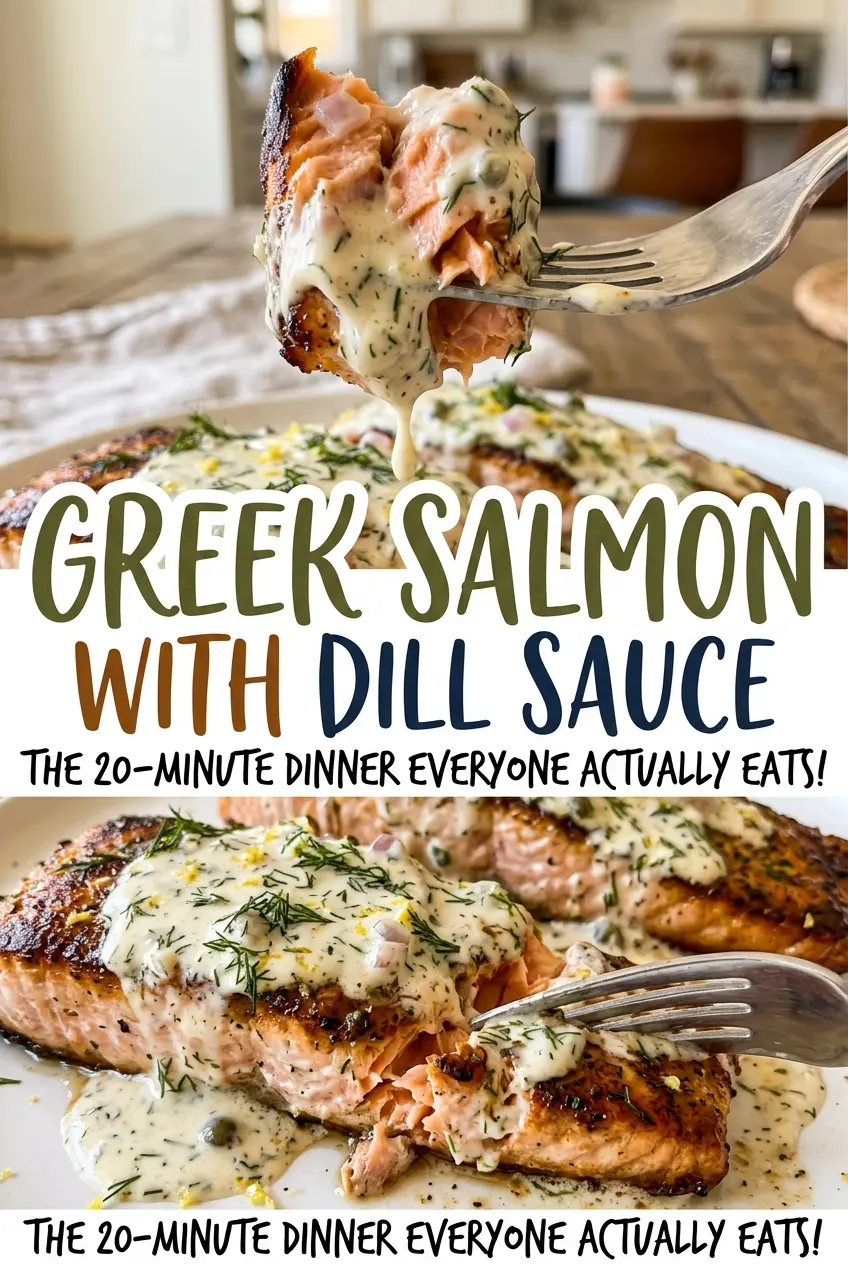
Save Greek Salmon with Dill Sauce for a dinner built around tender, lemony salmon and a cool fresh-dill finish.
Why the Salmon Bakes Skin Side Down
Skin-on salmon is especially easy to handle in the oven when you leave the skin underneath the fillet. It gives the fish a sturdy base on the parchment, so the tender flesh can bake without being turned or nudged halfway through. That’s helpful with a fillet, which can break apart if you try to flip it while it’s still hot and soft.
The skin also sits between the flesh and the baking sheet, but this method isn’t meant to crisp it. The salmon rests on parchment, skin side down, while the top takes on the lemon, oregano, and garlic. Keep the fish in one piece as it bakes and serve it from the sheet with a wide spatula; you can leave the skin attached or let the flesh separate from it as you portion. This simple orientation is the reason the method stays hands-off.
It’s worth checking the center rather than judging the whole fillet by its edges. Salmon pieces vary in thickness, and the thin end can look ready before the thickest section is cooked through. A thermometer gives you a clear target without requiring you to disturb the fish repeatedly.
Fresh Dill and Greek Yogurt Make the Sauce Work
- Skin-on salmon — Choose a fillet that looks moist and smells clean and mild. The skin helps the fish hold together while it bakes; a skinless piece can work, but it’s more delicate to move and may cook differently depending on thickness.
- Plain Greek yogurt — Its thick texture makes a sauce that clings to the salmon instead of running straight across the plate. A plain, unsweetened dairy-free Greek-style yogurt works as a swap; thinner varieties make a looser sauce, so check the texture before stirring in the lemon.
- Fresh dill — Freshly chopped dill gives the sauce its fragrant, green character. Dried dill won’t bring quite the same fresh texture or aroma, so fresh is worth choosing when you can.
- Lemon juice — Dividing the lemon juice gives the fish a bright surface seasoning and the yogurt a separate citrus lift. Fresh juice has a cleaner flavor, but bottled lemon juice works if that’s what you have.
- Dried oregano and garlic — Oregano gives the salmon its familiar Greek-inspired herbal note, while minced garlic adds savory flavor directly to the top. Mince the garlic finely so it’s spread over the fish rather than left in large clumps.
- Olive oil — Brushing the salmon with oil helps the seasoning coat the surface. A mild cooking oil can stand in, though olive oil gives the fish a more fitting savory finish.
Season the Salmon Evenly, Then Let the Oven Finish It
Stir Together the Cool Dill Sauce
In a small bowl, stir the Greek yogurt with the chopped fresh dill and 1 tablespoon of lemon juice. Mix until the dill is distributed throughout and the sauce looks evenly flecked. Cover the bowl and refrigerate it while the salmon cooks. Chilling it now keeps the sauce ready to serve alongside the warm fish.
Season the Fillet on Parchment
Heat the oven to 400°F and line a rimmed baking sheet with parchment paper. Set the salmon skin side down, brush the top with olive oil, then drizzle it with the remaining tablespoon of lemon juice. Sprinkle the oregano, minced garlic, kosher salt, and black pepper over the fish, spreading the garlic out so it isn’t concentrated in one spot. Keep the fillet in place rather than turning it; the skin stays against the parchment.
Bake to Temperature and Rest
Bake the salmon for 12 to 15 minutes, checking the thickest part of the fillet for doneness. It should reach 145°F and flake easily when you test it with a fork. If the center needs more time, return it to the oven and check again shortly rather than relying on a fixed extra stretch of baking. Let the salmon rest for 3 minutes before serving it with the chilled dill sauce.
Small Changes for a Different Balance
Make the Sauce Dairy-Free
Replace the Greek yogurt with the same amount of plain, unsweetened dairy-free Greek-style yogurt. The sauce will still bring a cool, tangy contrast, though its thickness and flavor can vary by brand; avoid sweetened varieties, which would clash with the lemon and dill.
Leave Out the Garlic for a Milder Fillet
Omit the minced garlic and keep the other salmon seasonings unchanged. You’ll lose the sharper savory note, but the oregano and lemon still give the fish a clear, bright flavor.
Put the Lemon in the Sauce Instead
For a more lemon-forward sauce, stir both tablespoons of lemon juice into the yogurt mixture and skip the lemon drizzle over the salmon. The sauce will taste sharper and may be a little looser, while the fish keeps its oregano and garlic seasoning.
Storage and Reheating
- Refrigerator: Refrigerate the salmon and dill sauce separately within 2 hours and use within 3 days. The fish will firm up as it chills, and the sauce may thicken slightly.
- Freezer: Freeze the cooked salmon tightly wrapped, without the sauce, for up to 2 months for best quality. Yogurt sauce can separate after freezing, so make a fresh batch instead.
- Reheating: Warm the salmon covered in a 275°F oven until it reaches 165°F. Gentle, covered reheating helps limit drying; avoid reheating it uncovered at high heat.
Questions That Come Up When Baking This Salmon
Greek Salmon with Dill Sauce
Ingredients
Equipment
Method
- Stir together the Greek yogurt, dill, and 1 tablespoon of the lemon juice in a small bowl.
- Cover and refrigerate the sauce while the salmon cooks.
- Heat the oven to 400°F.
- Line a rimmed baking sheet with parchment paper.
- Set the salmon skin side down on the baking sheet.
- Brush the salmon with the olive oil, then drizzle with the remaining 1 tablespoon lemon juice.
- Sprinkle the salmon with the oregano, garlic, salt, and pepper.
- Bake for 12 to 15 minutes, until the thickest part reaches 145°F and the flesh flakes easily with a fork.
- Let the salmon rest for 3 minutes.
- Serve the salmon with the dill sauce.