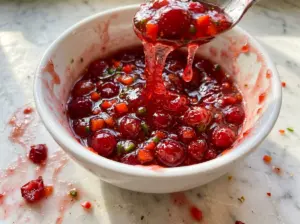
The food processor fills with bright red berries and orange, and a few pulses turn them into a fresh, tart relish with no pot on the stove. I like this Cranberry Relish because it keeps the fruit’s lively bite instead of cooking it down into a sauce. The whole batch comes together quickly, but it needs a little time in the refrigerator before the flavors settle into each other.
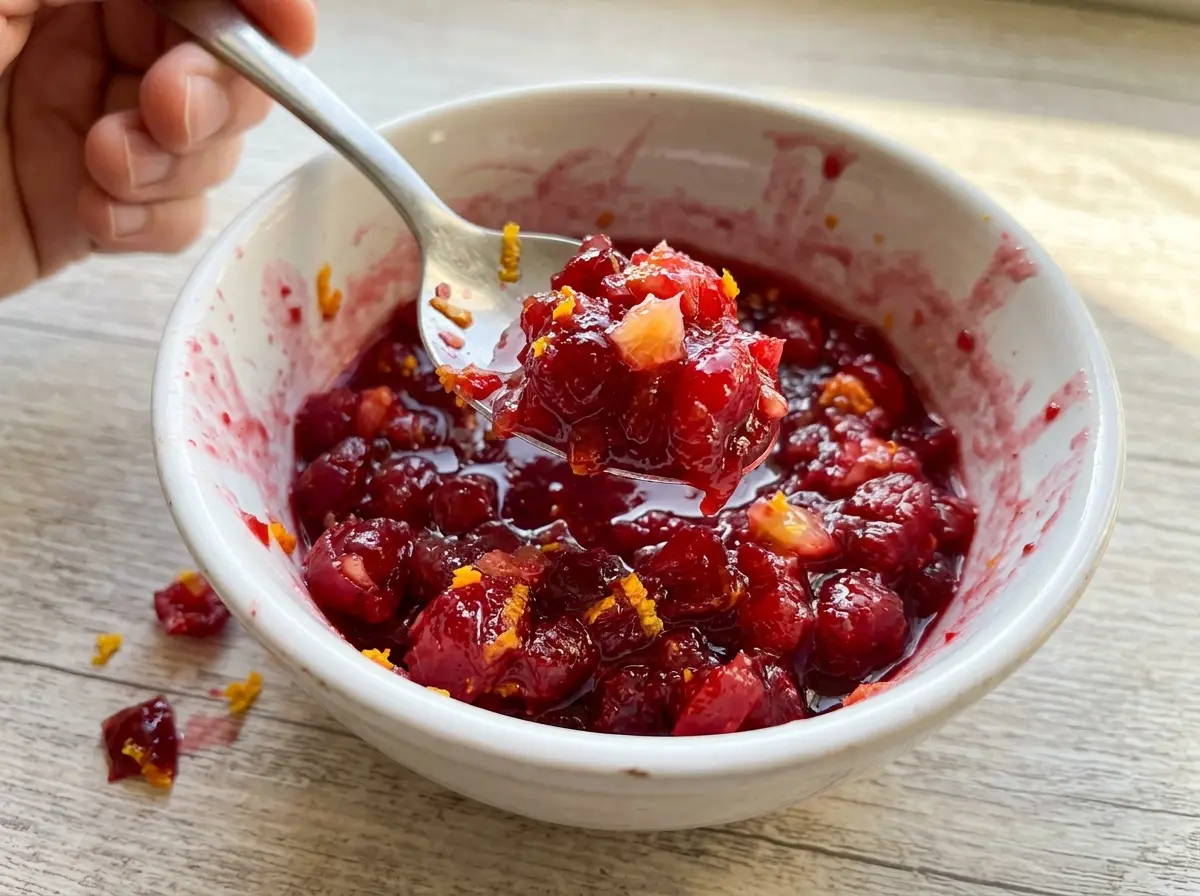
The orange goes in quartered, with its peel, so there’s no fiddly zesting or juicing. Pulse the fruit until it’s finely chopped, then add the sugar and pulse just until everything comes together. Don’t keep running the processor after that; this should be a chopped relish, not a smooth puree. After its rest, the cranberries are still vivid and tart, with the orange and sugar rounding out each spoonful.
Kitchen Note
Pause to scrape down the sides if pieces of orange or cranberry are riding above the blades. That quick check keeps the chop even without turning the fruit to puree.
Save this Cranberry Relish for a bright, fresh alternative to cooked cranberry sauce, made with whole orange and a quick pulse in the food processor.
Why This Relish Stays Bright Instead of Turning Into Cranberry Sauce
Cooked cranberry sauce softens as the berries heat and burst. This relish takes the opposite route: the food processor chops the cranberries while leaving the mixture fresh and textured. That distinction matters if you expect a spoonful to have a little bite rather than the soft, jammy consistency of a simmered sauce.
The fruit is chopped before the sugar goes in, so you can control the texture before adding the sweetener. A few pulses make a relish with visible pieces; a longer run makes it more uniform and can start to blur that chopped texture. Once the sugar is added, pulse only until it’s mixed through. The refrigerator rest gives the sugar time to dissolve into the fruit’s juices, bringing the sharp cranberry and fragrant orange into better balance without cooking either one.
Because nothing is cooked, the color stays vivid and the cranberry flavor stays direct. The sugar doesn’t erase the tartness; it tempers it. Expect a fresh relish with a definite tang, not a dessert-sweet sauce.
What the Whole Orange Adds to the Cranberries

- Fresh cranberries — Their firm texture holds up to pulsing, giving the relish its characteristic chopped bite. Rinse them and pick over the bag before processing, removing any soft or shriveled berries. Fresh cranberries are the right choice here; dried cranberries won’t provide the same juicy, tart base.
- Navel orange — The quartered orange goes in with its peel, bringing both juicy fruit and aromatic citrus oils. Wash it well before cutting, remove the seeds, and keep the peel on for the intended flavor. A sound, fresh orange matters more than choosing an expensive one; the peel is part of the relish, not waste to discard.
- Granulated sugar — Sugar balances the cranberries’ sharpness and helps the fruit juices taste rounded after chilling. Regular granulated sugar is the straightforward choice because it blends readily into the chopped fruit. Don’t assume another sweetener will behave or taste the same; this simple relish depends on the clean sweetness of sugar.
How to Chop the Fruit Without Losing the Relish Texture
Get the Cranberries and Orange Ready
Rinse the cranberries and pick through them, then wash the orange before quartering it. Remove the orange seeds, but leave the peel attached to the quarters. Starting with the fruit prepared this way means the processor can chop everything together evenly. Keep the pieces small enough to fit comfortably in the food processor bowl.
Pulse Until the Fruit Is Finely Chopped
Add the cranberries and orange quarters to the food processor and pulse, checking the texture as you go. Stop when the fruit is finely chopped and the pieces look fairly even, rather than letting the blades run continuously. If larger pieces cling to the sides, pause and scrape them down before pulsing again. Overprocessing is the main way to lose the relish’s pleasant chopped texture.
Add Sugar, Then Let the Flavors Settle
Add the sugar after the fruit has been chopped, and pulse only until it’s combined. The mixture should still look like chopped fruit, not a smooth liquid. Transfer it to a covered container and refrigerate for at least 2 hours before serving. That rest gives the sugar time to mingle with the fruit and takes the edge off the first sharp taste.
Two Texture Tweaks for Your Cranberry Relish
Leave it a little chunkier
For a more distinct cranberry-and-orange texture, stop pulsing as soon as the fruit is chopped into small, visible pieces. The relish will feel more rustic on the spoon, with less of a uniform consistency. Keep the ingredients and order the same; the adjustment is just how finely you chop.
Make the chop more uniform
If you prefer smaller, more even pieces, pulse the cranberries and orange until they’re finely chopped throughout, scraping down the bowl as needed. The result is easier to spoon neatly and has a more consistent texture in each bite. Stop before the fruit turns into a puree.
Making Ahead and Keeping It Fresh
- Refrigerator: Keep the relish covered and refrigerated; use it within 3 to 4 days for the freshest flavor. It may release a little juice as it sits.
- Freezer: Freezing isn’t my first choice because thawing softens the chopped fruit and changes the fresh texture. Make a batch for the refrigerator instead.
- Serving: Serve it cold, straight from the refrigerator. If juice has collected, stir gently so it’s distributed through the chopped fruit.
Questions That Come Up When Making Fresh Cranberry Relish
Cranberry Relish
Ingredients
Equipment
Method
- Add the cranberries and orange quarters, including the peel, to a food processor and pulse until finely chopped, scraping down the sides as needed.
- Add the sugar and pulse just until combined.
- Transfer the relish to a covered container.
- Refrigerate for at least 2 hours before serving.