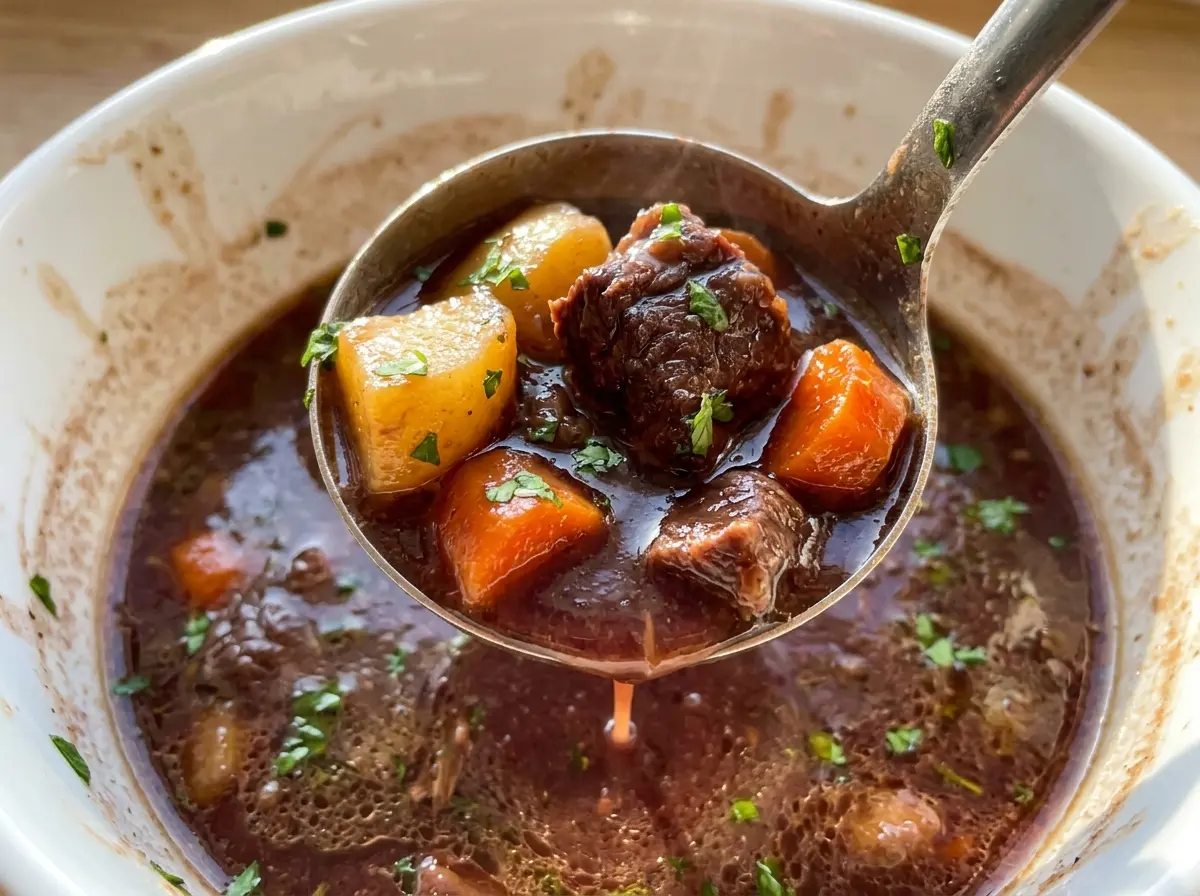
When a spoonful has tender beef, a soft potato, and a sweet piece of carrot all at once, the stew feels complete without needing anything complicated. I make this Red Wine Beef Stew with Potatoes and Carrots when I want a deeply savory pot with a broth that’s rich but not heavy. Dry red wine gives it a rounded, slow-cooked flavor, while the chuck becomes tender enough to pull apart with a fork.
The most satisfying part is how the ingredients come together at different points in the cooking. The beef gets time to soften before the potatoes and carrots join the pot, so each one finishes with the right texture. A little patience turns the broth glossy and the beef tender, with vegetables that still hold their shape on the spoon.
Kitchen Note
Let the stew rest off the heat for the full 10 minutes before ladling it out. That short pause gives the broth a chance to settle, and it’s easier to serve without breaking up the potatoes.
Save this Red Wine Beef Stew with Potatoes and Carrots for a cozy dinner built around fork-tender beef and a deeply savory wine broth.
Why the Potatoes Don’t Go Into the Pot at the Start
Beef chuck needs a longer, gentler cook than potatoes and carrots do. Put everything in together and the vegetables spend that whole stretch softening while the beef is still working toward tenderness. By the time the meat is ready, the potatoes can have lost their edges and the carrots can turn too soft to scoop neatly.
Giving the beef its own head start lets the timing work in your favor. When the vegetables go in later, they have enough time to take on the savory broth and become tender without being trapped in the pot for the entire braise. It also helps to keep the cuts consistent: the beef pieces are 1 1/2 inches, the potatoes are similar-sized chunks, and the carrots are cut smaller. That balance gives you distinct pieces in the finished stew, rather than a pot where one ingredient is ready long before the others.
Why Chuck, Yukon Golds, and Dry Red Wine Matter More Than Price

- Beef chuck — Its marbling and connective tissue suit a long, covered simmer, which is what makes these pieces tender. Choose evenly cut pieces so they cook at a similar pace; there’s no need to buy an especially expensive grade for stew.
- All-purpose flour — A light coating helps the beef brown and gives the broth some body as the stew cooks. Coat the pieces evenly rather than leaving thick clumps of flour, which can make the liquid pasty.
- Dry red wine — The wine brings acidity and depth that balance the beef’s richness. Use a dry red you’d be comfortable drinking; an expensive bottle isn’t needed, but avoid sweet wine, which can leave the broth tasting sugary.
- Low-sodium beef broth — It gives the stew its savory base while leaving more room to control the salt. A good everyday broth works well here; a particularly salty broth can make the finished liquid taste over-seasoned as it reduces.
- Yukon Gold potatoes — They turn creamy inside but keep their shape better than a very starchy potato. Pick firm potatoes without soft spots, and cut them into even chunks so they soften together.
- Carrots — They add sweetness that rounds out the wine and tomato paste. Fresh, firm carrots are the better choice here; peel them and cut the pieces evenly so none are left hard in the center.
- Tomato paste, onion, garlic, thyme, and bay leaf — Together they build a savory background without competing with the beef. Tomato paste benefits from its short cook in the pot before the wine goes in, and dried thyme is a convenient fit for a long simmer.
Brown First, Then Let the Dutch Oven Do the Slow Work
Coat and Brown the Beef in Uncrowded Batches
Toss the beef with the flour, kosher salt, and black pepper in a large bowl until each piece is evenly coated. Heat the vegetable oil in a 6-quart Dutch oven over medium-high heat. Brown the beef in batches for 3 to 4 minutes per side, then transfer each batch to a plate. If you crowd the pot, the pieces steam against one another instead of developing a browned exterior.
Soften the Onion and Deglaze With Wine
Add the chopped onion to the pot and cook for 4 to 5 minutes, stirring, until softened. Stir in the minced garlic and tomato paste and cook for 1 minute; keep the garlic moving so it doesn’t scorch. Pour in the dry red wine and scrape the browned bits from the bottom of the pot. Stir in the beef broth, dried thyme, and bay leaf, then return the beef and any juices to the pot.
Simmer the Beef Before Adding Vegetables
Bring the liquid to a simmer, cover the Dutch oven, and cook over low heat for 1 1/2 hours. Look for a gentle simmer rather than a hard, fast boil. If the liquid is bubbling vigorously, lower the heat; a steady, gentle cook is easier on the beef and keeps the covered pot from boiling aggressively. Keep the lid on so the stew can cook evenly.
Finish Until the Beef Pulls Apart Easily
Stir in the potatoes and carrots, cover the pot again, and simmer for 45 to 60 minutes. The vegetables should be tender, and the beef should pull apart easily with a fork; check both before taking the pot off the heat. Remove the bay leaf, then leave the stew to rest off the heat for 10 minutes before serving.
Two Useful Ways to Adapt This Pot of Beef Stew
Make the Flour Coating Gluten-Free
Replace the all-purpose flour with a cup-for-cup gluten-free all-purpose flour blend, using the same amount for coating the beef. The stew will still develop body, though the coating may brown a little differently depending on the blend. Toss the pieces until they’re lightly covered, without packing flour onto the surface.
Mash a Few Potatoes for a Thicker Broth
For a more rustic, thicker stew, press a few of the tender potato chunks against the side of the pot near the end of cooking, then stir them into the broth. The potatoes give the liquid extra body without changing its flavor. The trade-off is a cloudier broth and fewer intact potato pieces.
Storage and Reheating
- Refrigerator: Refrigerate leftovers within 2 hours and keep them in a covered container for 3 to 4 days. The potatoes soften a little as the stew sits.
- Freezer: Freeze in airtight containers for up to 3 months for best quality. The potatoes may be softer after thawing, but the stew remains suitable for reheating.
- Reheating: Warm on the stovetop over medium-low heat, stirring gently, until the stew reaches 165°F. Avoid a hard boil, which can break up the softened potatoes.
Questions I Get Asked About This Beef Stew
Red Wine Beef Stew with Potatoes and Carrots
Ingredients
Equipment
Method
- In a large bowl, toss the beef with the flour, salt, and pepper until the pieces are evenly coated.
- Heat the oil in a 6-quart Dutch oven over medium-high heat.
- Brown the beef in batches for 3 to 4 minutes per side.
- Transfer the browned beef to a plate.
- Add the onion to the pot and cook for 4 to 5 minutes, stirring, until softened.
- Add the garlic and tomato paste and cook for 1 minute.
- Pour in the wine and scrape up the browned bits from the bottom of the pot.
- Stir in the broth, thyme, and bay leaf.
- Return the beef and any juices to the pot and bring to a simmer.
- Cover and cook over low heat for 1 1/2 hours.
- Stir in the potatoes and carrots.
- Cover and simmer for 45 to 60 minutes, until the vegetables are tender and the beef pulls apart easily with a fork.
- Remove the bay leaf.
- Let the stew rest off the heat for 10 minutes before serving.