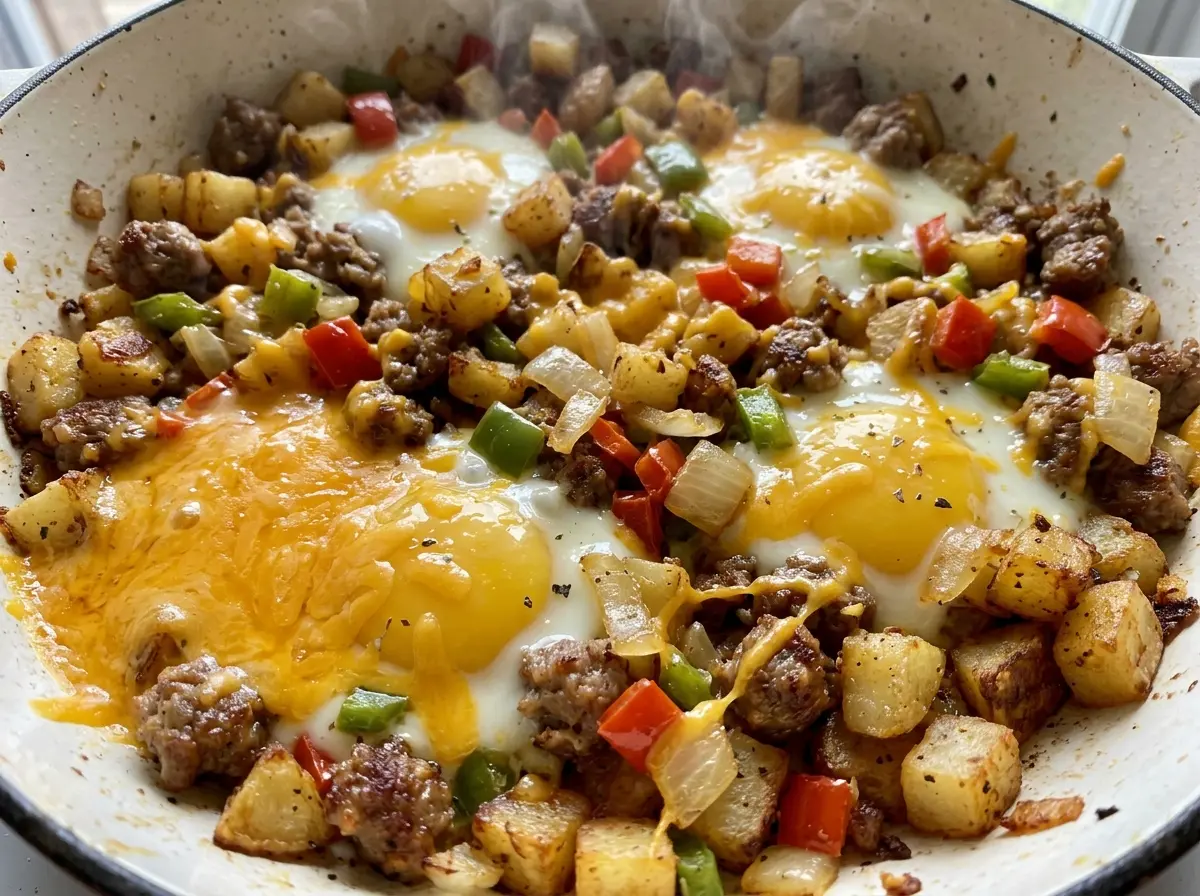
The potatoes are the part that can turn a breakfast skillet from crisp and browned to soft and pale. Frozen diced potatoes need a little covered time first, then room for their surface moisture to cook off. That change in the pan is what makes this Country Breakfast Skillet worth keeping in the regular breakfast rotation.
I cook the sausage first, then use the same skillet for the vegetables and potatoes, so the savory browned bits stay in the dish. The sausage is drained before the measured oil goes in; that small reset keeps the finished skillet from feeling greasy. Eggs go in near the end, where a gentle stir gives you tender curds tucked between the potatoes rather than a separate layer of scrambled eggs. Finish with cheddar while everything is still hot, and it melts right over the top.
Kitchen Note
Once the cheddar goes on, leave the eggs alone. I cover the skillet just until the cheese melts; stirring at this point breaks up the soft egg curds you worked to keep intact.
Save this Country Breakfast Skillet for a brunch with browned potatoes, savory sausage, tender eggs, and melted cheddar in one pan.
Why the Skillet Gets Drained Before the Potatoes Go In
Breakfast sausage leaves rendered fat behind as it browns. Some is useful for cooking, but keeping all of it in the pan makes it harder to control how rich and oily the potatoes turn out. I transfer the browned sausage and drain the skillet carefully, then add the measured vegetable oil with the onion and bell pepper. That gives the vegetables a consistent amount of fat to soften in, without carrying an unpredictable pool of sausage grease into the next stage.
There’s also a practical benefit to building the skillet in this order: the sausage can wait on its plate while the potatoes get direct contact with the hot pan. When the sausage goes back in, it warms through alongside the eggs instead of sitting underneath the potatoes and getting in the way of their browning. If you skip draining, the skillet may still cook, but the potatoes are more likely to taste heavy rather than browned and savory. A careful drain is easier than trying to correct an overly greasy finished dish.
What the Sausage, Frozen Potatoes, and Cheddar Each Bring

- Ground pork breakfast sausage — Breakfast sausage brings its own seasoning and browns into small, flavorful crumbles. Plain ground pork won’t give the same result without adding seasonings, so the sausage is doing more here than providing meat. Break it into small pieces as it cooks so it distributes through the potatoes and eggs.
- Frozen diced potatoes — Frozen potatoes are convenient and consistent in size, and the covered-then-uncovered cooking gives them time to soften before their edges brown. Use them straight from the freezer; thawing changes the moisture in the pan and makes the timing less predictable. The inexpensive bag is perfectly suited to this skillet.
- Yellow onion and green bell pepper — These soften into the base and bring sweetness and a mild vegetal note without competing with the sausage. Dice them into similar-size pieces so they soften at about the same pace. There’s no need to seek out specialty produce; fresh, firm vegetables are all you need.
- Large eggs — Large eggs give the skillet enough structure to hold the sausage and potatoes together without turning it into an egg-heavy scramble. Beat them in a bowl before adding them so yolks and whites are evenly mixed. Gentle stirring keeps the finished curds tender.
- Sharp cheddar — Sharp cheddar gives the top a distinct, tangy cheese flavor against the savory sausage. A bag of shredded sharp cheddar is convenient and works well here; a milder cheddar can be used in its place for a softer cheese flavor. Keep the cheese for the final topping rather than mixing it through the eggs.
Build the Skillet in Stages for Browned Potatoes and Tender Eggs
Brown the Sausage and Clear the Pan
Heat a 12-inch skillet over medium-high heat and add the ground pork breakfast sausage. Break it into small crumbles as it cooks, giving the pieces time to brown rather than leaving them in large clumps. Cook for 8 to 10 minutes, until browned and cooked to 160°F. Transfer it to a plate, then carefully drain the skillet.
Soften the Onion and Pepper
Add the vegetable oil, diced onion, and diced green bell pepper to the skillet. Cook over medium heat for 4 to 5 minutes, stirring occasionally, until the vegetables have softened. Keep them moving now and then so they cook evenly across the pan. They should be tender, not browned deeply.
Soften the Frozen Potatoes, Then Brown Them
Stir in the frozen diced potatoes, kosher salt, and black pepper, then cover the skillet. Cook over medium heat for 10 minutes; the lid gives the frozen pieces time to heat through and soften. Uncover and cook for 8 to 12 minutes, stirring occasionally, until the potatoes are tender and browned. If they’re still pale, give them time in that uncovered stage rather than stirring constantly.
Fold the Sausage Back In and Set the Eggs
Return the browned sausage to the skillet and stir it through the potatoes. Beat the eggs in a bowl, pour them into the skillet, and lower the heat to medium-low. Stir gently as the eggs set so they form soft curds among the potatoes instead of clumping in one spot. Cook for about 3 to 5 minutes, until fully set and at 160°F.
Melt the Cheddar Over the Top
Sprinkle the shredded sharp cheddar evenly over the skillet. Cover and cook for 1 to 2 minutes, until the cheese melts. The hot potatoes and eggs help warm the cheese from below, while the lid holds enough heat to finish the top. Take the skillet off the heat once the cheddar has melted rather than leaving it covered longer than needed.
Simple Ways to Change the Skillet Without Losing Its Character
Leave Out the Bell Pepper
Skip the green bell pepper and keep the rest of the ingredients and method the same. The skillet will have less vegetal sweetness, while the onion still gives the potatoes a savory base. This is a useful adjustment if you prefer a simpler potato-and-sausage flavor.
Make It Without the Cheddar
Omit the cheese if you want the sausage, potatoes, and eggs to stay in the foreground. The skillet won’t have the creamy melted topping, but it still holds together as a complete breakfast. Since there’s no cheese to melt, skip the covered finishing stage.
Storage and Reheating
- Refrigerator: Store leftovers in an airtight container for 3 to 4 days. The potatoes soften as they sit, but the skillet reheats well.
- Freezer: Freeze in airtight portions for up to 2 months. The eggs and potatoes will be softer after thawing, so the texture won’t be quite as fresh as the day it’s made.
- Reheating: Warm leftovers in a covered skillet over low heat, stirring gently, until they reach 165°F throughout. High heat can make the eggs tough before the center is warm.
Questions That Come Up When Making This Breakfast Skillet
Country Breakfast Skillet
Ingredients
Equipment
Method
- Heat a 12-inch skillet over medium-high heat and cook the sausage, breaking it into small crumbles, for 8 to 10 minutes, until browned and cooked to 160°F.
- Transfer the sausage to a plate and carefully drain the skillet.
- Add the oil, onion, and bell pepper to the skillet and cook over medium heat for 4 to 5 minutes, stirring occasionally, until softened.
- Stir in the frozen potatoes, salt, and pepper, cover, and cook over medium heat for 10 minutes.
- Uncover and cook for 8 to 12 minutes, stirring occasionally, until the potatoes are tender and browned.
- Return the sausage to the skillet and stir to combine.
- Beat the eggs in a bowl and pour them into the skillet.
- Cook over medium-low heat, stirring gently, until fully set and 160°F, about 3 to 5 minutes.
- Sprinkle the cheese over the skillet, cover, and cook for 1 to 2 minutes, until the cheese melts.