The beef and onion need a little color before they go into the slow cooker. That skillet step is what gives Crockpot Lasagna Soup its savory start, instead of asking the slow cooker to do a job it can’t do well. I brown the beef until there’s no pink left, soften the onion, and drain away the excess grease before anything moves to the crock.
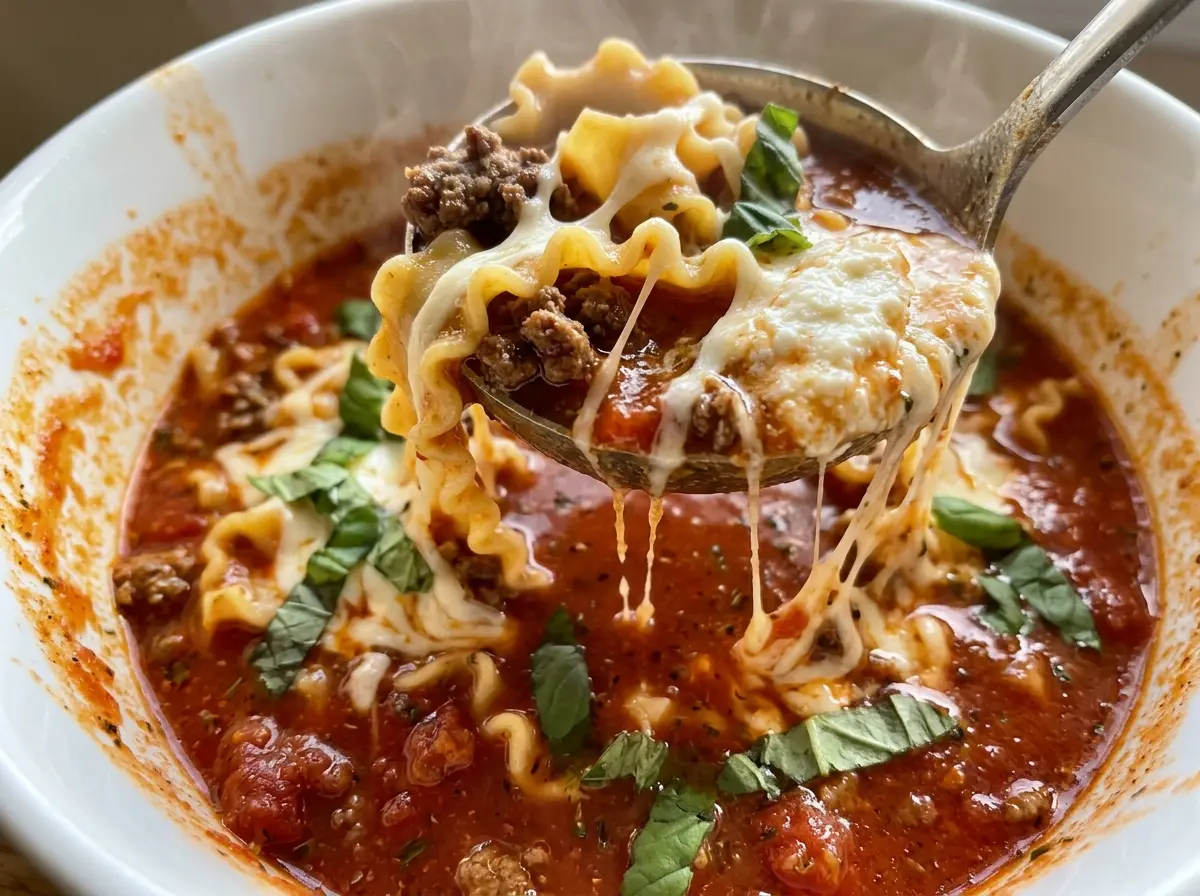
Lasagna noodles need a different kind of attention. Add them near the end, not at the beginning, so they cook through without spending hours soaking up broth. Broken into short pieces, they’re easy to catch on a spoon, and the tomato broth stays the star. A cool, creamy scoop of ricotta, mozzarella, and Parmesan on top finishes each bowl like the cheesy layer of a lasagna, without turning the whole pot heavy.
It’s a hearty six-serving supper with a rich tomato base, tender noodles, and a cheese topping you can portion bowl by bowl.
Kitchen Note
I keep the cheese mixture out of the slow cooker and add it to each bowl. That way, the ricotta stays creamy and distinct instead of disappearing into the tomato broth.
Save Crockpot Lasagna Soup for a cozy dinner with tender noodle pieces, tomato-rich broth, and a creamy three-cheese topping.
Why Lasagna Noodles Go in Near the End
Lasagna noodles don’t just soften in the slow cooker; they keep taking in liquid as they sit. If they spend the full slow-cooking stretch in the pot, they can turn overly soft and leave you with less broth in each bowl. Holding them back until the tomato-beef base is cooked gives you more control over both the noodle texture and the soup’s consistency.
Once the base has had its long cook, add the broken noodles and switch the slow cooker to HIGH. They need 30 to 45 minutes to become tender, so start checking near the shorter end of that range. The right stopping point is a noodle piece that’s easy to bite through, not one that’s falling apart. The soup will continue to thicken as it sits, especially after the noodles are added, so serving it when they’re just tender helps keep it spoonable.
That timing also makes this a good soup to serve soon after the noodles finish. The broth and beef can wait through the long cook; the noodles are the part that benefit from a shorter trip in the pot.
What the Beef, Tomatoes, and Cheese Each Bring

- Ground beef — The 85% lean beef gives the broth a savory base while still bringing enough fat for a full, meaty flavor. Drain the extra grease after browning so the finished soup doesn’t carry an oily layer. A fresh package is fine; there’s no need to seek out a specialty grind.
- Crushed and diced tomatoes — Using both gives the broth body while leaving small tomato pieces throughout. Crushed tomatoes help make the base cohesive, and diced tomatoes bring a more noticeable bite. Standard canned tomatoes work well here; the different textures matter more than choosing a premium brand.
- Low-sodium beef broth — This is the liquid that carries the beef and tomato flavors through the slow cook. Low-sodium broth gives you more room to season the soup without starting with a salty base. The recipe pairs it with kosher salt, black pepper, and Italian seasoning rather than relying on a premixed soup base.
- Lasagna noodles — Breaking the noodles into short pieces makes them easier to serve in soup and lets them fit in the slow cooker. Use lasagna noodles rather than a different pasta shape if you want the familiar lasagna feel in each spoonful.
- Ricotta, mozzarella, and Parmesan — Ricotta makes the topping soft and creamy, mozzarella brings its familiar stretchy quality, and Parmesan adds a sharper, savory note. Shredded mozzarella and grated Parmesan are ready to stir into the ricotta without extra prep.
- Garlic, onion, tomato paste, and Italian seasoning — These build the savory base before the slow cooking begins. Dicing the onion evenly helps it soften alongside the beef, and the tomato paste cooks briefly with the garlic and seasoning so it blends into the mixture.
Build the Tomato Base Before the Noodles Go In
Brown the Beef and Soften the Onion
Cook the ground beef and diced onion in a large skillet over medium-high heat, breaking the beef into small pieces as it cooks. Give it 7 to 9 minutes, until the beef is browned and the onion has softened. If the beef is still pink or the onion still feels firm, let the skillet work a little longer rather than rushing the transfer. Drain excess grease, then stir in the kosher salt and black pepper.
Cook the Aromatics in the Skillet
Stir the minced garlic, tomato paste, and Italian seasoning into the beef mixture. Cook for 1 minute, stirring so the garlic and paste are distributed rather than left in one spot. The mixture should smell fragrant and look evenly coated. Keep it moving during this short cook so the garlic doesn’t scorch.
Let the Tomato and Beef Broth Slow-Cook
Transfer the skillet mixture to a 6-quart slow cooker, then add the crushed tomatoes, diced tomatoes, and low-sodium beef broth. Stir to combine and cover. Cook on LOW for 6 to 7 hours or on HIGH for 3 to 4 hours; the long simmer gives the beef and tomato base time to come together. Don’t add the noodles during this stage.
Cook the Noodles Until Tender
Stir in the lasagna noodles broken into 2- to 3-inch pieces, cover, and cook on HIGH for 30 to 45 minutes. Check a piece near the beginning of that window, then continue cooking if its center is still firm. Noodles that are tender but still hold their shape are ready for the bowls. Avoid judging them by the broth alone; taste a noodle piece.
Mix the Cheese and Finish Each Bowl
While the noodles cook, stir the ricotta, shredded mozzarella, and grated Parmesan together in a small bowl. Once the noodles are tender, ladle the soup into bowls and add some of the cheese mixture to each serving. The hot soup softens the topping at the edges while leaving a creamy scoop on top. Serve soon after the noodles finish for the best texture.
Two Ways to Change the Bowl Without Changing the Pot
A Creamier, Swirled Finish
For a creamier bowl, stir some of the cheese mixture into an individual serving instead of leaving it all on top. The ricotta softens into the hot tomato broth, while mozzarella makes the texture a little more stretchy. Keep the rest of the topping as a separate scoop if you like having both textures in one bowl.
A More Tomato-Forward Serving
Use a smaller spoonful of the prepared cheese mixture on each bowl to let the beef and tomato broth stand out more. The soup itself stays the same, but each bite has less creamy topping. This is an easy way to serve different preferences from the same slow cooker without changing the pot.
Storage and Reheating
- Refrigerator: Refrigerate leftover soup promptly in a covered container and use it within 3 to 4 days. The noodles will soften as they sit and absorb broth.
- Freezer: Freeze the soup in portions for up to 2 to 3 months for best quality. The noodles will be softer after thawing, and the cheese topping is best mixed fresh rather than frozen on the soup.
- Reheating: Reheat a portion gently on the stovetop, stirring now and then, until it reaches 165°F. Avoid boiling it hard; that can break up the noodles before the soup is hot through.
Questions That Come Up With Crockpot Lasagna Soup
Crockpot Lasagna Soup
Ingredients
Equipment
Method
- In a large skillet over medium-high heat, cook the ground beef and onion, breaking up the beef, until the beef is browned and the onion is softened, 7 to 9 minutes. Drain excess grease and stir in the salt and pepper.
- Stir the garlic, tomato paste, and Italian seasoning into the skillet and cook for 1 minute, then transfer the mixture to a 6-quart slow cooker.
- Add the crushed tomatoes, diced tomatoes, and beef broth, then cover and cook on LOW for 6 to 7 hours or HIGH for 3 to 4 hours.
- Stir in the broken lasagna noodles, cover, and cook on HIGH for 30 to 45 minutes, until the noodles are tender.
- Stir together the ricotta, mozzarella, and Parmesan in a small bowl.
- Ladle the soup into bowls and top each serving with some of the cheese mixture.