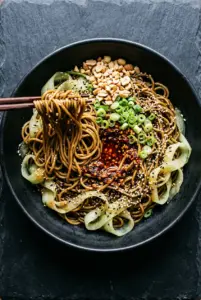
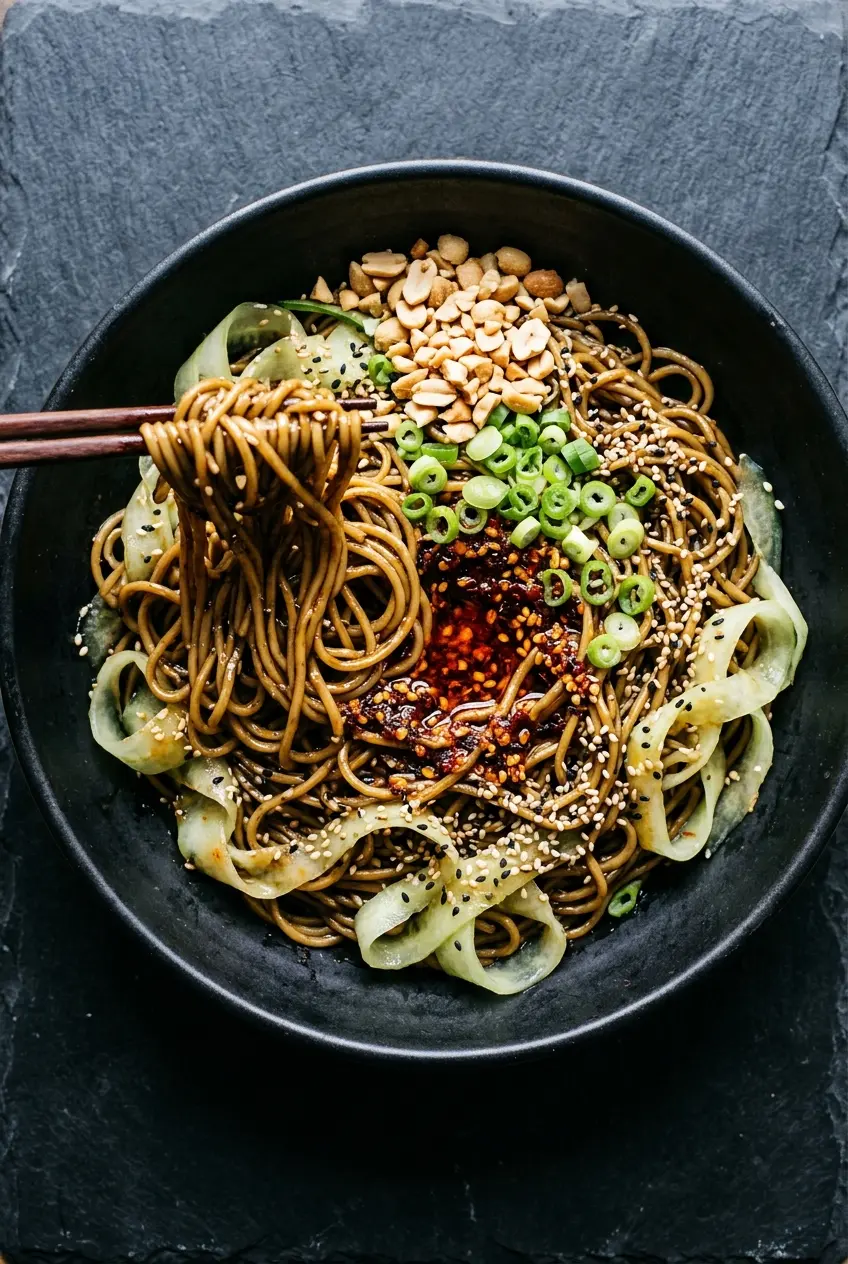
Glossy sesame noodles with cool cucumber ribbons and a hit of chili crisp land in that sweet spot between refreshing and deeply satisfying. The sauce clings to every strand, the cucumbers stay crisp-tender, and the peanut-sesame topping gives each bite a little crunch that keeps you going back for another forkful.
What makes this version work is the balance: tahini brings body, soy sauce brings salt, rice vinegar sharpens the richness, and a splash of cold water loosens everything just enough so it coats instead of clumps. The cucumbers get salted first so they don’t dump water into the bowl, and the noodles are rinsed well so the starch doesn’t turn the sauce gluey. Those two little steps are the difference between a good noodle bowl and one that gets heavy fast.
Below, you’ll find the small details that keep the sauce silky, the best way to shave the cucumbers into ribbons, and a few smart swaps if you want to make this with what’s already in your kitchen.
The sauce coated every noodle without turning thick and pasty, and the cucumber ribbons stayed crisp even after lunch the next day. My husband kept sneaking bites straight from the fridge.
Cold sesame noodles with cucumber ribbons and chili crisp make the kind of bowl that stays glossy, cool, and punchy. Pin it for a fast dinner that still feels special.
The Sauce Breaks When You Rush the Water
This bowl depends on a sauce that stays creamy without turning paste-thick, and that comes down to how you loosen the tahini. Add the cold water gradually. The goal is a smooth, pourable sauce that looks a touch thinner than you want in the bowl, because it tightens once it hits warm noodles and sits for a minute.
The other mistake is tossing everything together while the noodles are still hot. Hot noodles absorb sauce fast and can make the whole dish dry before it ever reaches the table. Rinse them until they feel cool to the touch, then coat them with a little sesame oil so they don’t weld together while the rest of the ingredients are ready.
- Tahini or Chinese sesame paste — Tahini gives you that nutty, creamy base, while Chinese sesame paste is darker and deeper. Either works, but sesame paste brings a more pronounced toasted flavor if you can find it.
- English cucumbers — Their thin skins and small seed core make the ribbons easy to manage and less watery than standard cucumbers. If you only have regular cucumbers, peel them first and scoop out the seedy center before shaving.
- Chili crisp — This is not just heat. The oil, garlic, and crunchy bits give the bowl its finishing texture and that glossy red sheen. Stir some into the noodles, then save a little for the top so the flavor stays bright.
- Fresh ginger and garlic — These keep the sauce from tasting flat. Grate the ginger finely and mince the garlic small so they disappear into the dressing instead of biting back in random chunks.
The 20 Minutes That Matter Most
Cooking the Noodles Until They’re Just Tender
Boil the noodles until they’re just barely done, then stop. They should still have a little bite, because cooling softens them further and the sauce will finish the job. Drain right away and rinse under cold running water until they no longer feel warm or slick. If you skip the rinse, the starch left on the surface will thicken the sauce into a sticky coating instead of a glossy one.
Shaving the Cucumbers into Ribbons
Run a vegetable peeler lengthwise down the cucumber to make long ribbons, stopping when you get to the seeded center. Salt them and let them sit for 10 minutes so the excess water pulls out before they hit the bowl. Pat them dry after resting. If you don’t do that, the cucumbers will dilute the sauce and the noodles will taste watered down by the time you serve them.
Whisking the Sauce Until It Pours Cleanly
Start with tahini, soy sauce, vinegar, sesame oil, honey, ginger, and garlic, then whisk until it loosens into a smooth paste. Add the cold water a tablespoon at a time until it falls off the whisk in a slow ribbon. That texture matters. Too thick and it grabs in clumps; too thin and it slides right off the noodles instead of coating them.
Finishing the Bowl Without Crushing the Ribbons
Toss the cooled noodles with the sauce first so every strand gets covered, then fold in the cucumbers and most of the chili crisp gently. You want the cucumber ribbons to stay intact and visible, not chopped up by overmixing. Finish with the remaining chili crisp, sesame seeds, green onions, and peanuts right before serving so the top stays crunchy and the oil stays glossy.
Three Ways to Make This Bowl Fit Your Kitchen
Gluten-Free Version
Use rice noodles or certified gluten-free ramen and swap in tamari for the soy sauce. The sauce still turns creamy and bold, but the noodles will be a little more delicate, so rinse them carefully and toss gently once they’re coated.
No-Tahini Option
If tahini isn’t in the cabinet, use Chinese sesame paste for a deeper roasted note, or smooth natural peanut butter for a slightly sweeter, softer sauce. Peanut butter changes the flavor more than the texture, so add the water a little more slowly until it loosens properly.
Make It Heartier
Add shredded chicken, seared tofu, or chilled shrimp if you want this to eat like a full dinner. Keep the protein lightly seasoned so it doesn’t fight the sesame sauce, and add it at the end so the noodles stay the main event.
Storage and Reheating
- Refrigerator: Best eaten within 2 days. The noodles hold up, but the cucumbers will soften and release moisture the longer they sit.
- Freezer: Don’t freeze this one. The cucumber turns watery and the sauce loses its smooth texture after thawing.
- Reheating: This dish is meant to be served cold or at room temperature. If it’s been chilled hard, let it sit out for 10 to 15 minutes and loosen it with a spoonful of water or sesame oil before eating.
Answers to the Questions Worth Asking
Coconut Lime Icebox Cake with Mango Ribbons
Ingredients
Equipment
Method
- Open the refrigerated full-fat coconut cream cans without shaking, then scoop only the solid cream from the top into a chilled bowl (discard the liquid or save for smoothies). Beat with an electric stand mixer on medium-high for 2 minutes until light and fluffy; no temperature is needed.
- Add the powdered sugar, lime zest, lime juice, and vanilla extract, then beat for 30 seconds until incorporated and smooth.
- Use a vegetable peeler to shave the mangoes into long thin ribbons, working around the pit. Set the ribbons aside on paper towels to release water while you assemble the cake.
- Spread a thin layer of coconut cream on the bottom of a 9x13 pan. Lay the graham crackers in a single layer, breaking them as needed to fill gaps.
- Spread one-third of the remaining coconut cream evenly over the crackers, reaching the edges so the layer is uniform.
- Repeat with two more layers of graham crackers and coconut cream, finishing with a cream layer on top. Smooth the surface with an offset spatula.
- Refrigerate uncovered for at least 6 hours or overnight so the graham crackers absorb moisture and soften into a cake-like texture. Keep chilled; a cake pulled at about 4 hours will still have crunch.
- Just before serving, arrange the mango ribbons in loose folds across the top, scatter the toasted shredded coconut, and finish with fresh mint leaves. Slice with a sharp knife dipped in hot water and wiped clean between cuts.