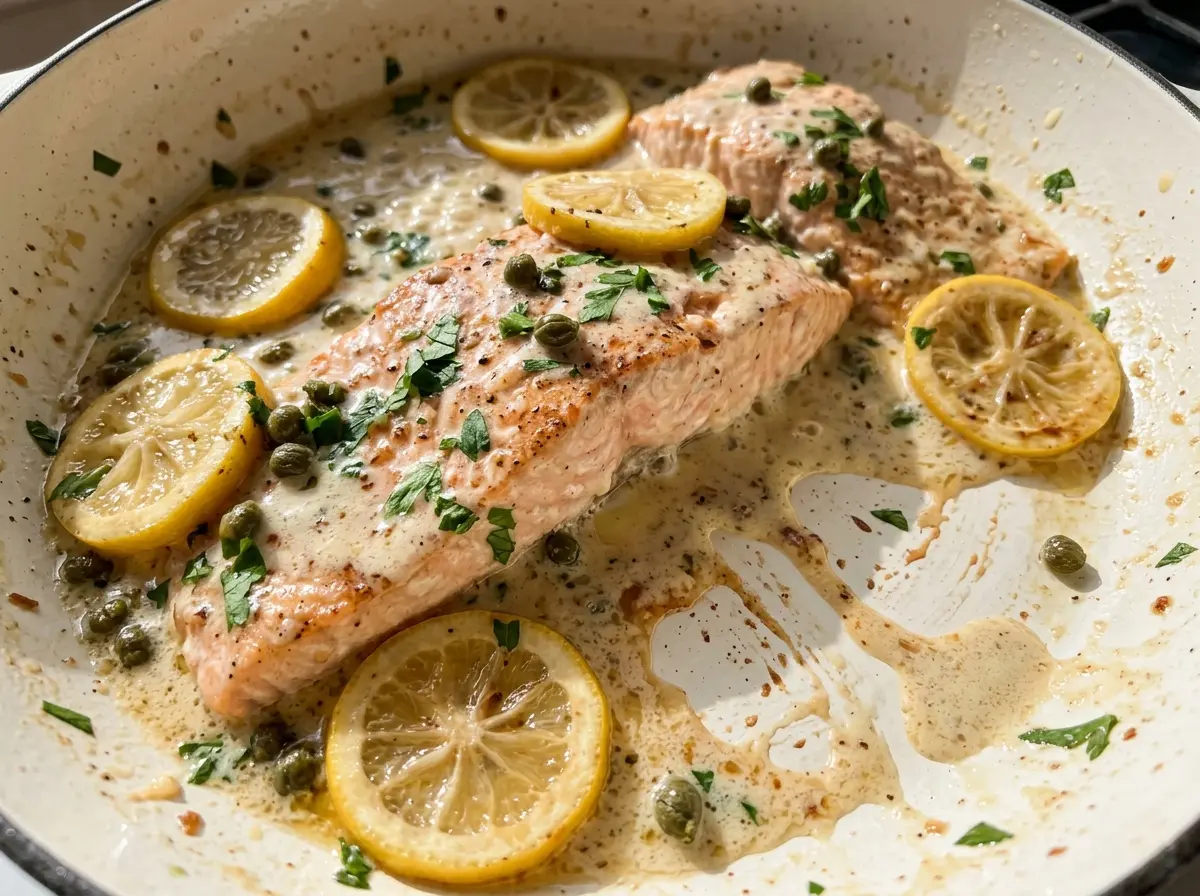
When the salmon comes out of the skillet, the pan looks like it needs washing: a few toasted flour bits and browned spots cling to the bottom. Don’t reach for the sponge. Those are exactly what make the sauce for Creamy Salmon Piccata with Lemon and Capers taste like it belongs with the fish, not like cream poured over a fillet. The salmon stays tender, while lemon and capers keep each bite lively instead of heavy.
I pat the fillets dry, give them a light flour coating, and brown them in olive oil. Then that same skillet builds a sauce with savory depth from the pan and enough cream to coat the fish. Fresh lemon juice goes in after the sauce leaves the heat, and capers cut through its richness. The result feels special without asking you to juggle several pans or keep track of a long list of steps.
Kitchen Note
I use the 12-inch skillet so all four fillets have room to sit flat rather than overlap. If they’re crowded, the flour coating won’t brown as evenly.
Save Creamy Salmon Piccata with Lemon and Capers for its silky sauce, bright lemon, and briny capers.
Why the Wine Goes In Before the Cream in This Piccata Sauce
Wine has a job beyond adding a little acidity: it loosens the browned bits from the skillet and lets their savory flavor become part of the sauce. Simmering it before adding the broth and cream concentrates that flavor and takes the raw edge off the wine. Scrape the bottom of the pan as it simmers, so those flavorful bits don’t stay stuck where the salmon cooked.
Adding the cream after the wine has reduced also gives you better control over the finished texture. The wine can simmer down by about half without the dairy reducing along with it, and the cream only needs a gentle simmer to thicken slightly. The sauce isn’t supposed to be a heavy gravy; it should be loose enough to spoon over the fish but cling to the surface. Lemon juice and capers go in once the skillet is off the heat, so the finished sauce tastes bright and briny against the creamy base.
The Ingredients That Keep Piccata Bright Instead of Heavy
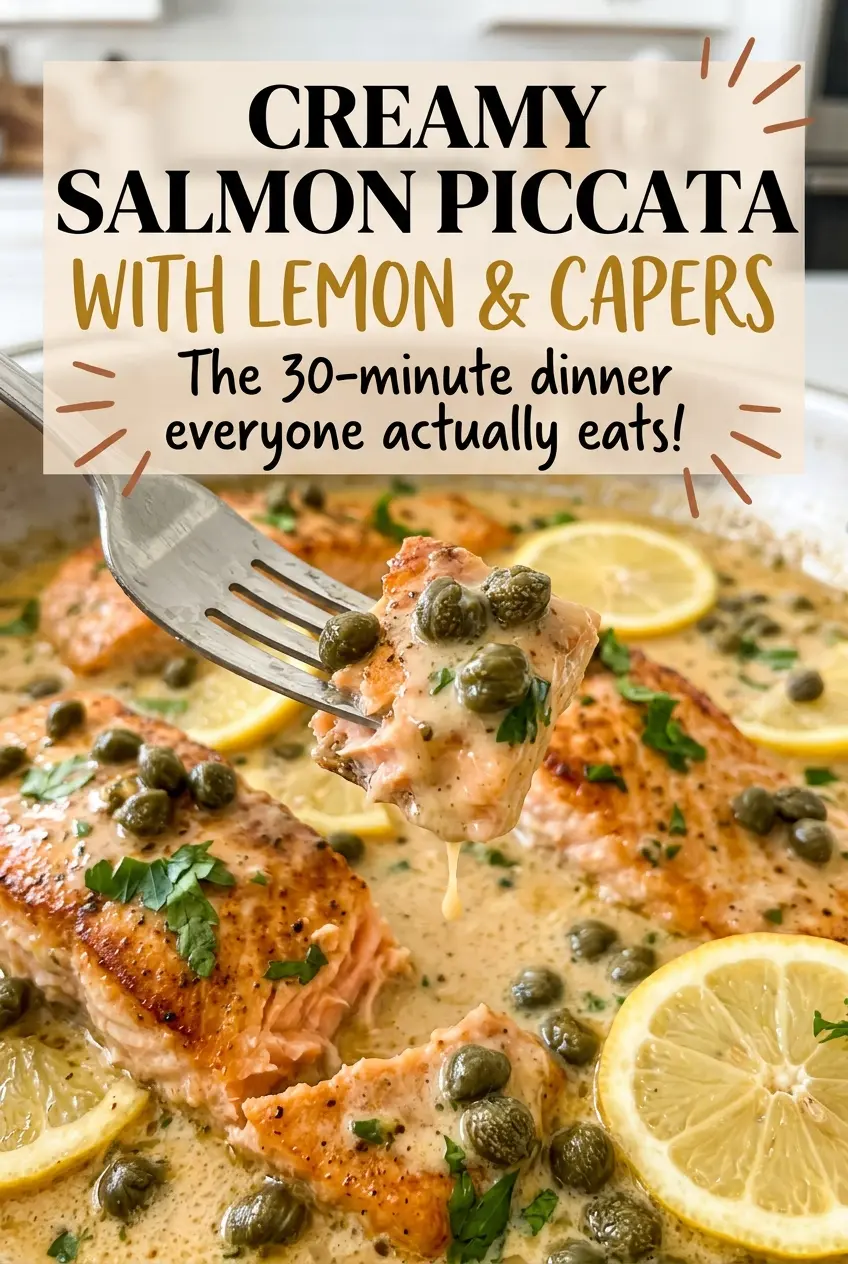
- Salmon — Skinless fillets about an inch thick cook evenly with the timing here. Center-cut pieces tend to be consistent in thickness; thin ends cook faster, so keep an eye on them rather than relying on the clock alone.
- All-purpose flour — It forms a light coating that browns in the skillet and helps the sauce cling to the fish. For a gluten-free version, use a gluten-free all-purpose blend designed for a 1:1 swap; the coating may brown a little differently.
- Olive oil and unsalted butter — Regular olive oil is fine for searing; save a pricier finishing oil for another use. Butter rounds out the sauce, while unsalted lets the salt level stay balanced alongside the capers. A neutral oil can replace the olive oil for searing, though the flavor will be less fruity.
- Dry white wine and chicken broth — Choose a dry wine, not a sweet or salted cooking wine; an inexpensive bottle is plenty. Low-sodium broth matters because the capers bring their own salt. If you use regular-sodium broth, the finished sauce will taste saltier.
- Heavy cream — Its fat gives the sauce body and helps it stay silky through a gentle simmer. Milk isn’t a good swap here; it makes a thinner sauce and is more likely to separate when the lemon is added.
- Fresh lemon juice — Freshly squeezed juice tastes clean and lively in the cream sauce. Bottled juice can stand in at the same amount, but it won’t have quite the same fresh citrus aroma.
- Capers and parsley — Drain the capers well so extra brine doesn’t water down the sauce; they provide the salty, tangy bite that defines piccata. Fresh parsley gives the finished dish a green, clean note, and chopped chives can replace it if that’s what you have.
Building a Cream Sauce Around a Properly Seared Salmon Fillet
Dry and Coat the Fillets
Pat the salmon dry, then season both sides with the kosher salt and black pepper. Dredge each fillet in the all-purpose flour, turning to coat, and shake off the excess. A thin, even layer is what you want; loose flour can scorch in the pan and make the sauce pasty. Keep the coated fish ready beside the skillet before you start cooking.
Sear Until the Edges Turn Opaque
Heat the olive oil in a 12-inch skillet over medium-high heat. Add the salmon and cook for 3–4 minutes per side, until the edges look opaque and the thickest part reaches 145°F. If a fillet resists when you try to turn it, give it another moment rather than pulling at it; a browned surface releases more easily. Transfer the cooked fillets to a plate.
Reduce the Wine Over the Browned Bits
Reduce the heat to medium and add the butter and minced garlic, stirring for about 30 seconds until fragrant. Pour in the dry white wine and scrape up the browned bits from the skillet as it simmers. Let it cook for 2–3 minutes, until it has reduced by about half. Keep the garlic moving in the butter so it turns fragrant without browning.
Finish the Sauce Gently Around the Fish
Stir in the chicken broth and heavy cream, then simmer gently for 2–3 minutes, until the sauce thickens slightly. Take the skillet off the heat before stirring in the lemon juice and drained capers. Return the salmon and spoon sauce over the fillets, then warm everything over low heat for 1–2 minutes without letting the sauce boil. Sprinkle with chopped parsley and serve.
Simple Swaps That Keep the Lemon-Caper Sauce in Balance
Make it gluten-free with a 1:1 flour blend
Replace the all-purpose flour with the same amount of gluten-free all-purpose flour blend, then dredge and shake off the excess as usual. The fish still gets a light coating, though the crust may be a little less golden or cohesive than one made with wheat flour.
Leave out the wine without losing the sauce
Replace the wine with the same volume of low-sodium chicken broth, then reduce it by about half before adding the rest of the broth and cream. The sauce will be more savory and less aromatic, but the lemon and capers still give it the sharp, briny character that makes piccata taste like piccata.
Use green olives for a softer briny bite
Swap the drained capers for the same amount of chopped, drained green olives. They’re milder and meatier than capers, so the sauce loses some of its sharp little pops but keeps a salty, briny finish.
Storage and Reheating
- Refrigerator: Cool leftovers promptly and refrigerate them in an airtight container within 2 hours. They’ll keep for up to 3 days; the salmon may be a little drier and the sauce may separate slightly.
- Freezer: I don’t recommend freezing this dish. The cream sauce can separate as it thaws, and the cooked salmon tends to lose its tender texture.
- Reheating: Warm the salmon and sauce in a covered skillet over low heat with a small splash of chicken broth, just until the leftovers reach 165°F. Don’t let the sauce boil; high heat can make it separate and can overcook the fish.
Questions That Come Up When the Sauce Meets the Salmon
Creamy Salmon Piccata with Lemon and Capers
Ingredients
Equipment
Method
- Pat the salmon dry.
- Season both sides of the salmon with the salt and pepper.
- Dredge the salmon in the flour, shaking off the excess.
- Heat the olive oil in a 12-inch skillet over medium-high heat.
- Cook the salmon for 3–4 minutes per side, until opaque at the edges and 145°F in the thickest part, then transfer to a plate.
- Reduce the heat to medium and add the butter and garlic to the skillet.
- Cook, stirring, for about 30 seconds, until fragrant.
- Pour in the wine and scrape up the browned bits from the skillet.
- Simmer for 2–3 minutes, until reduced by about half.
- Stir in the chicken broth and cream.
- Simmer gently for 2–3 minutes, until slightly thickened.
- Remove the skillet from the heat and stir in the lemon juice and capers.
- Return the salmon to the skillet and spoon the sauce over it.
- Warm over low heat for 1–2 minutes without boiling.
- Sprinkle with the parsley and serve.