The vegetables soften quietly in the pot, then the broth turns cloudy as it meets the flour. That’s the point where a potato soup can go from smooth to lumpy if you rush it. I stir the broth in gradually, and the base comes together without any stubborn flour pockets. This creamy vegan potato soup keeps the ingredients familiar while oat milk brings a mellow, creamy finish.
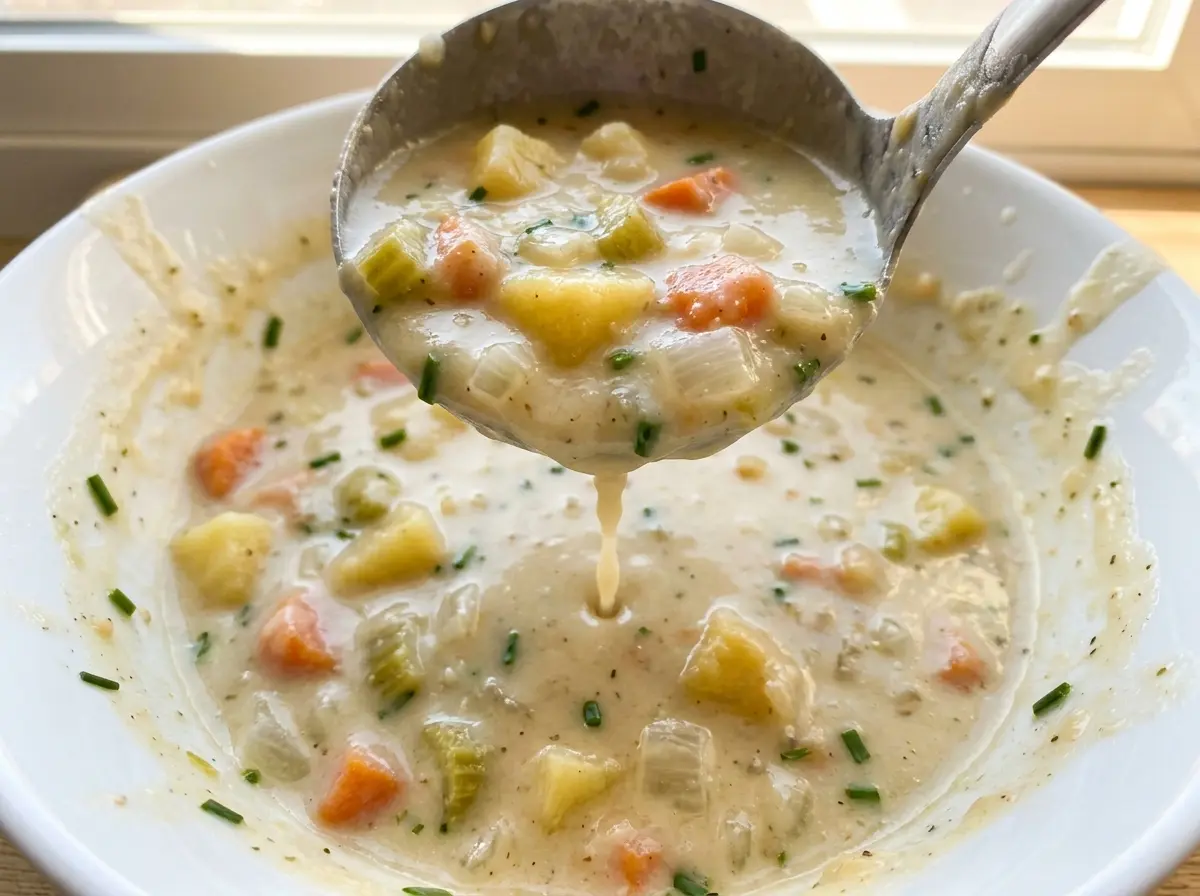
Russet potatoes do two jobs here: some hold their shape, while the pieces you mash against the pot thicken the broth naturally. I like that better than blending the whole pot, because you still get tender potato chunks in each spoonful. A gentle simmer after adding the oat milk keeps the soup smooth and lets the flavors settle into a cozy, savory bowl.
Kitchen Note
A 5-quart Dutch oven gives the potatoes room to simmer and makes it easier to stir without sloshing broth over the sides. I stick with that size for this batch rather than crowding everything into a smaller pot.
Save this creamy vegan potato soup for a cozy dinner: tender russets, a silky oat milk broth, and plenty of potato chunks in every bowl.
Why the Broth Needs a Flour Base Before the Potatoes Go In
A potato soup can taste right and still feel thin, or have little floury lumps floating through it. The difference starts before the potatoes hit the pot. Cooking the flour with the softened vegetables for a full minute gives it time to lose its raw taste and coat the vegetables evenly. Then the broth goes in gradually, while you stir, so the flour disperses into liquid instead of clumping.
That brief base-building step matters because the potatoes need time to cook through in the broth. Adding flour later would leave less opportunity to smooth it out, and relying only on mashed potatoes for thickness would make the result heavier and less even. The flour gives the liquid body; the mashed russets finish the job. If you see a clump while pouring in the broth, pause and whisk or stir it smooth before adding more. Once the base is even, the simmer does the patient work of softening the potatoes.
Why Russets and Plain Oat Milk Make This Soup Creamy

- Russet potatoes — Their starchy texture helps thicken the broth when you mash some of the cooked pieces against the pot. Choose potatoes that feel firm and have no soft spots. Keep the cubes close to the same half-inch size so they soften at roughly the same pace.
- Unsweetened plain oat milk — It adds a mild, creamy quality without making the soup taste sweet or bringing in a strong flavor of its own. Check that the carton is plain and unsweetened; flavored or sweetened varieties can pull the soup in the wrong direction. Unsweetened plain soy milk works as a substitute, though the finished soup may taste a little less oat-forward.
- All-purpose flour — This is what gives the broth a cohesive, lightly thickened texture before any potatoes are mashed. A basic, fresh bag is fine here; there’s no need for specialty flour. For a gluten-free version, use a measure-for-measure gluten-free flour blend in its place, knowing the broth may thicken a little differently.
- Vegan butter — It gives the onion, celery, and garlic a buttery base while keeping the soup vegan. Use a vegan butter you enjoy the taste of, since its flavor carries through the vegetables. Olive oil can replace it in the same amount for a less buttery, slightly fruitier base.
- Yellow onion, celery, and garlic — Together, they build a savory foundation that keeps the potatoes and oat milk from tasting flat. Dice the onion and celery evenly so both soften during the same cooking window, and mince the garlic so it can cook briefly without leaving large sharp pieces.
Build the Soup in Four Stages for a Smooth, Chunky Bowl
Soften the Onion and Celery First
Melt the vegan butter in a 5-quart Dutch oven over medium heat, then add the diced onion and celery. Cook for 5 to 7 minutes, stirring occasionally, until both vegetables have softened. They should look tender rather than browned. Stir in the minced garlic for 30 seconds; garlic burns quickly, so keep it moving and don’t let it sit on the hot pot bottom.
Cook the Flour Before Adding Broth
Sprinkle the flour over the vegetables and stir constantly for 1 minute. It should coat the vegetables instead of gathering in dry patches. Pour in the vegetable broth gradually, stirring as you go, until the liquid looks smooth. Adding it all at once makes it harder to work out flour lumps, so take a moment with this part.
Simmer Until the Potato Cubes Yield
Add the potatoes, kosher salt, and black pepper, then bring the soup to a boil. Reduce the heat to medium-low, cover the pot, and simmer for 15 to 20 minutes, stirring occasionally. The potatoes are ready when a fork slides into a cube without resistance. If the fork still meets a firm center, keep simmering and check again rather than mashing undercooked pieces.
Finish Gently with Oat Milk
Stir in the oat milk and let the soup simmer gently for 3 to 5 minutes. Keep the heat calm; a hard boil isn’t needed after the milk goes in. Press some of the tender potatoes against the side of the pot to mash them, then stir them through the broth. Stop while plenty of potato chunks are still intact for a thick but not completely smooth texture.
Three Practical Swaps for a Different Pantry or Diet
Make It Gluten-Free with a Measure-for-Measure Blend
Replace the all-purpose flour with the same amount of a measure-for-measure gluten-free flour blend. It keeps the soup gluten-free while still thickening the broth, though some blends make a slightly less silky base. Stir it into the vegetables just as you would the regular flour and watch for a smooth mixture as the broth goes in.
Use Plain Soy Milk Instead of Oat Milk
Swap in an equal amount of unsweetened plain soy milk for the oat milk. The soup stays vegan and creamy, with a slightly more noticeable bean-like note than the oat version. Avoid vanilla or sweetened soy milk, which doesn’t suit the savory broth.
Trade the Vegan Butter for Olive Oil
Use the same amount of olive oil in place of vegan butter when you soften the vegetables. The soup remains dairy-free, but the base tastes less buttery and a little more vegetal. This is a useful swap if your preferred vegan butter has a strong flavor.
Storage and Reheating
- Refrigerator: Store in a covered container for 3 to 4 days. The potatoes will continue to absorb liquid, so the soup may be thicker after chilling.
- Freezer: Freeze in an airtight container for up to 2 to 3 months. The potatoes can turn a little grainy after thawing, but stirring the soup well as it reheats helps bring it back together.
- Reheating: Warm gently on the stovetop, stirring now and then, until the soup reaches 165°F. Avoid cranking up the heat to rush it; scorching on the bottom is the usual problem with a thick soup.
Questions That Come Up While Making Vegan Potato Soup
Creamy Vegan Potato Soup
Ingredients
Equipment
Method
- Melt the vegan butter in a 5-quart Dutch oven over medium heat. Add the onion and celery and cook for 5 to 7 minutes, stirring occasionally, until softened.
- Stir in the garlic for 30 seconds.
- Sprinkle the flour over the vegetables and cook, stirring constantly, for 1 minute.
- Gradually stir in the vegetable broth until smooth.
- Add the potatoes, salt, and pepper and bring the soup to a boil.
- Reduce the heat to medium-low, cover, and simmer for 15 to 20 minutes, stirring occasionally, until the potatoes are fork-tender.
- Stir in the oat milk and simmer gently for 3 to 5 minutes.
- Mash some of the potatoes against the side of the pot to thicken the soup, leaving some chunks intact.