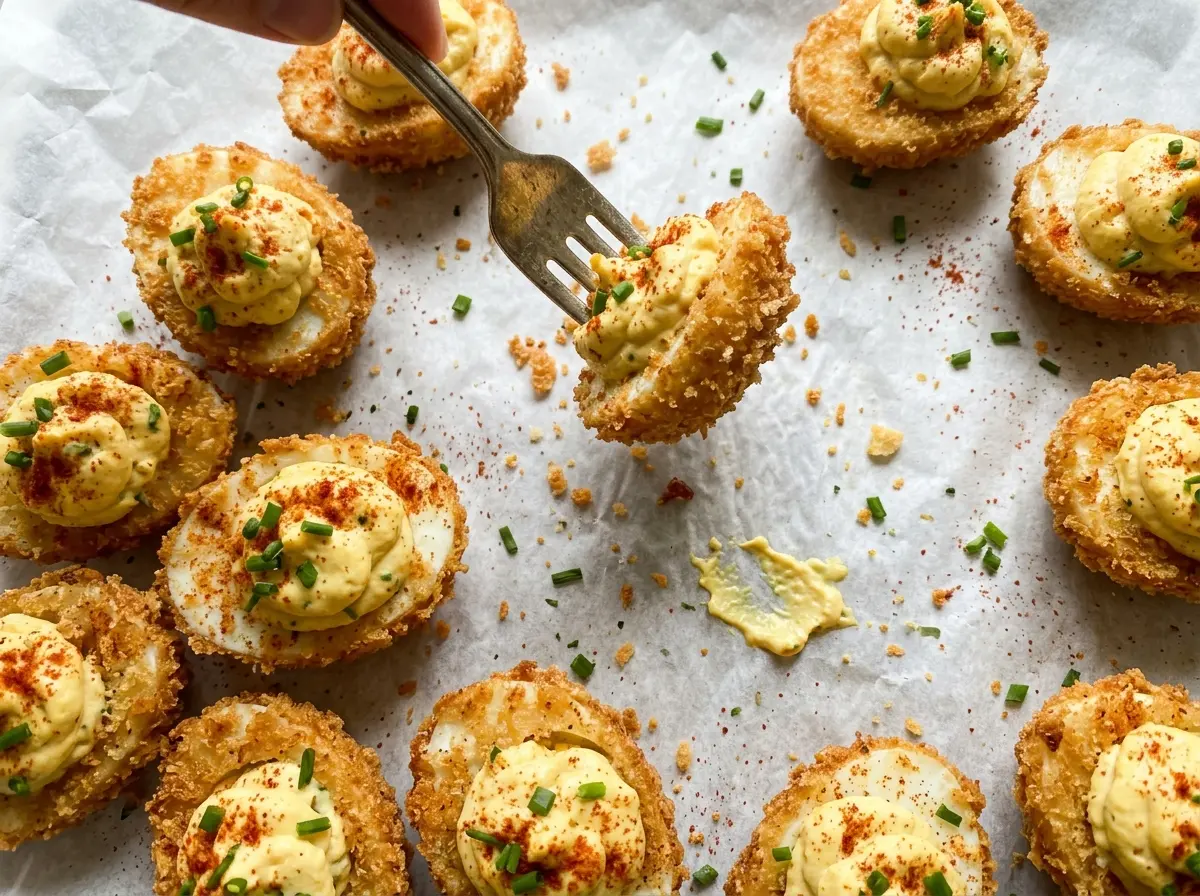
The first egg white I breaded came out with a patchy crust because the crumbs slid off before they hit the oil. Now I dry the whites thoroughly before setting up the flour, beaten eggs, and panko. That little bit of prep gives these Crispy Fried Deviled Eggs a crunchy, golden shell around the soft yolk filling.
I like that the filling can chill while the whites are coated and fried, so the last-minute work is just spooning or piping it into the centers. The eggs stand off the heat after coming to a boil, which keeps the whites tender instead of rubbery. Keep the oil close to 350°F, fry in batches, and turn the halves gently once; the finished eggs have a crisp coating and a cool, tangy center.
Kitchen Note
Pat the egg whites dry before they go into the flour. Any moisture left on the surface turns the flour into little clumps instead of an even first layer.
Save these Crispy Fried Deviled Eggs for their crisp panko shells and cool, tangy filling.
Why the Panko Coating Slips Off Egg Whites
Egg whites are smooth and curved, so the coating needs to cling before it ever reaches the skillet. The flour gives the beaten egg something to hold on to, and the egg helps the panko adhere. Skip a layer or rush through it and you’re more likely to find bare patches—or crumbs floating loose in the oil.
Work in order: flour first, then beaten egg, then panko. Press the crumbs on gently so they cover the surface without crushing them into a dense layer. When you lower the coated halves into the oil, give them room; crowding drops the oil temperature and makes the coating absorb more oil instead of crisping. Fry in batches and keep the temperature near 350°F. Turn each half gently once so the crust browns evenly without scraping it off.
The coating should look golden and feel crisp before you lift each half onto paper towels. A thermometer is useful here because the oil can cool when cold, breaded eggs go in. Adjust the burner as needed between batches, rather than letting the skillet drift far from the target temperature.
What the Eggs, Panko, and Tangy Filling Each Bring

- Large eggs — Six eggs make the halves that get filled; two more are beaten for the coating. Keeping the cooked whites intact matters because they’re the little cups for the filling and need to hold their shape through breading and frying. Cool them completely before peeling and halving.
- Mayonnaise — This gives the mashed yolks a smooth, creamy texture. A regular grocery-store mayonnaise works well; the filling doesn’t need a specialty product. Mash it in until no dry yolk remains.
- Dijon mustard and white vinegar — Dijon brings a mellow mustard bite, while vinegar gives the rich yolk mixture a sharper edge. Both are small but noticeable parts of the filling, so I keep them rather than swapping in a different mustard or acid and changing the balance.
- All-purpose flour and panko — Flour is the first coating layer; panko makes the exterior more open and crisp than a fine, compact crumb would. Standard grocery-store panko is fine. Keep the panko in a shallow bowl so each curved surface is easy to coat.
- Vegetable oil — Its neutral taste lets the egg and filling come through. No specialty frying oil is needed; what matters most is using enough oil for shallow-frying in the skillet and monitoring its temperature with a thermometer.
From Tender Hard-Cooked Eggs to Crisp, Filled Halves
Let the Eggs Finish Cooking Off the Heat
Set six eggs in a 3-quart saucepan and cover them with cold water by 1 inch. Bring the water to a full boil over high heat, cover the pan, then take it off the burner and let the eggs stand for 12 minutes. Moving the pan off the heat matters: the eggs finish cooking in the hot water without a prolonged boil. Transfer them to cold water and cool them completely before peeling.
Make a Smooth, Chilled Yolk Filling
Halve the peeled eggs lengthwise and set the whites cut-side up on a tray. Put the yolks in a medium bowl and mash them with the mayonnaise, Dijon, vinegar, salt, and pepper until smooth. If the filling still has dry, crumbly bits, keep mashing rather than leaving lumps in the finished centers. Cover the bowl and refrigerate the filling while you prepare and fry the whites.
Build Three Even Layers
Pat the whites dry, then set out three shallow bowls: one with flour, one with the two remaining eggs beaten until blended, and one with panko. Coat each white in flour, dip it in the beaten egg, and finish in the panko. Press the crumbs on gently so they cling all the way around, including the curved sides. Keep one hand for the dry coating and the other for the egg if you want to avoid building a thick batter on your fingers.
Fry Until Golden, Then Fill
Heat the vegetable oil in a 12-inch high-sided skillet over medium heat until a thermometer reads 350°F. Shallow-fry the coated whites in batches for 2 to 3 minutes, turning each one gently once; they’re ready when the coating is crisp and golden. Keep the oil near 350°F as you work, and transfer each batch to a paper-towel-lined plate. Let the fried whites cool for 5 minutes, then spoon or pipe the chilled yolk filling into the centers and serve.
Two Ways to Change the Shape or Texture
Set Out a Deconstructed Dipper Platter
For a less formal appetizer, arrange the fried egg whites on a platter and put the chilled yolk filling in a bowl beside them. The crisp halves work as dippers, and the filling stays cool instead of sitting inside the warm shells. This keeps the same components and gives guests control over how much filling goes on each bite.
Make the Panko Shell More Even
For a finer, more uniform crust, lightly crush the panko between your fingers before coating the whites. Use the same panko amount and the same flour-egg-panko order. The smaller crumbs make a tighter-looking shell with less of the big, craggy texture.
Storage and Reheating
- Refrigerator: Store leftovers in a covered container for 3 to 4 days. The panko will soften as it sits.
- Freezer: Freezing isn’t recommended; cooked egg whites and mayonnaise-based filling both lose their best texture after thawing.
- Reheating: These are best served fresh or eaten cold from the refrigerator. Reheating isn’t ideal: a microwave softens the crust, and warming filled halves can heat the filling unevenly.
Questions That Come Up While Making Crispy Fried Deviled Eggs
Crispy Fried Deviled Eggs
Ingredients
Equipment
Method
- Place 6 eggs in a 3-quart saucepan.
- Add 2 quarts cold water to cover them by 1 inch.
- Bring the water to a full boil over high heat.
- Cover the pan.
- Remove the pan from the heat.
- Let the eggs stand for 12 minutes.
- Transfer the eggs to cold water, adding more water for cooling, and cool completely.
- Peel the eggs.
- Halve the eggs lengthwise.
- Place the whites cut-side up on a tray.
- Put the yolks in a medium bowl.
- Mash the yolks with the mayonnaise, Dijon mustard, vinegar, salt, and pepper until smooth.
- Cover and refrigerate the filling while you bread and fry the whites.
- Pat the egg whites dry.
- Set out three shallow bowls with the flour, the 2 remaining eggs beaten until blended, and the panko.
- Pour the vegetable oil into a 12-inch high-sided skillet.
- Heat the oil over medium heat to 350°F, checking with a thermometer.
- Coat the whites in flour, then beaten egg, then panko, pressing the crumbs on gently.
- Shallow-fry in batches for 2 to 3 minutes, turning gently once, until crisp and golden; keep the oil near 350°F.
- Transfer the fried whites to a paper-towel-lined plate.
- Let the fried whites cool for 5 minutes.
- Spoon or pipe the chilled filling into the centers.
- Serve.