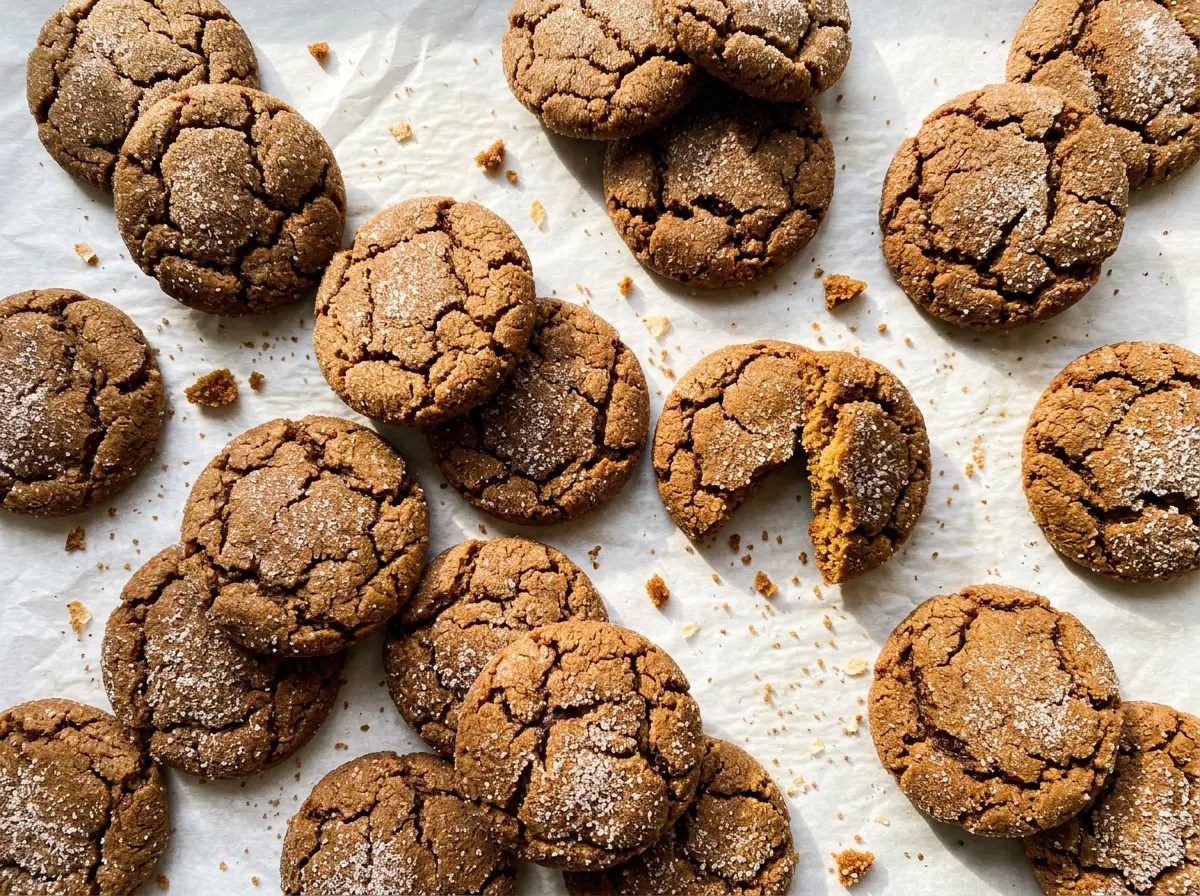
The first thing you notice is how dark and soft the dough looks beside the bowl of rolling sugar. These Disney Molasses Crackle Cookies bake up with a fine sugary crust and warm ginger flavor, while the centers stay tender. They’re the kind of cookie where a few minutes in the oven make all the difference.
I like how the spices come through without taking over the molasses. The dough is straightforward to mix, and chilling gives it enough body to scoop and roll into tidy little balls. A tablespoon portion also keeps the batch consistent, so the cookies bake at about the same pace.
Once the tops split and the kitchen smells of ginger and cinnamon, it’s tempting to wait for the centers to look firm. Don’t. The edges set first, and the cookies finish settling on the baking sheet. That’s how you get crackled tops with a soft middle instead of a dry, crisp cookie.
Kitchen Note
Roll each portion until the sugar coats it evenly, including the sides. Bare spots show up as dull patches on the baked cookies, so I take a quick look before arranging each ball on the sheet.
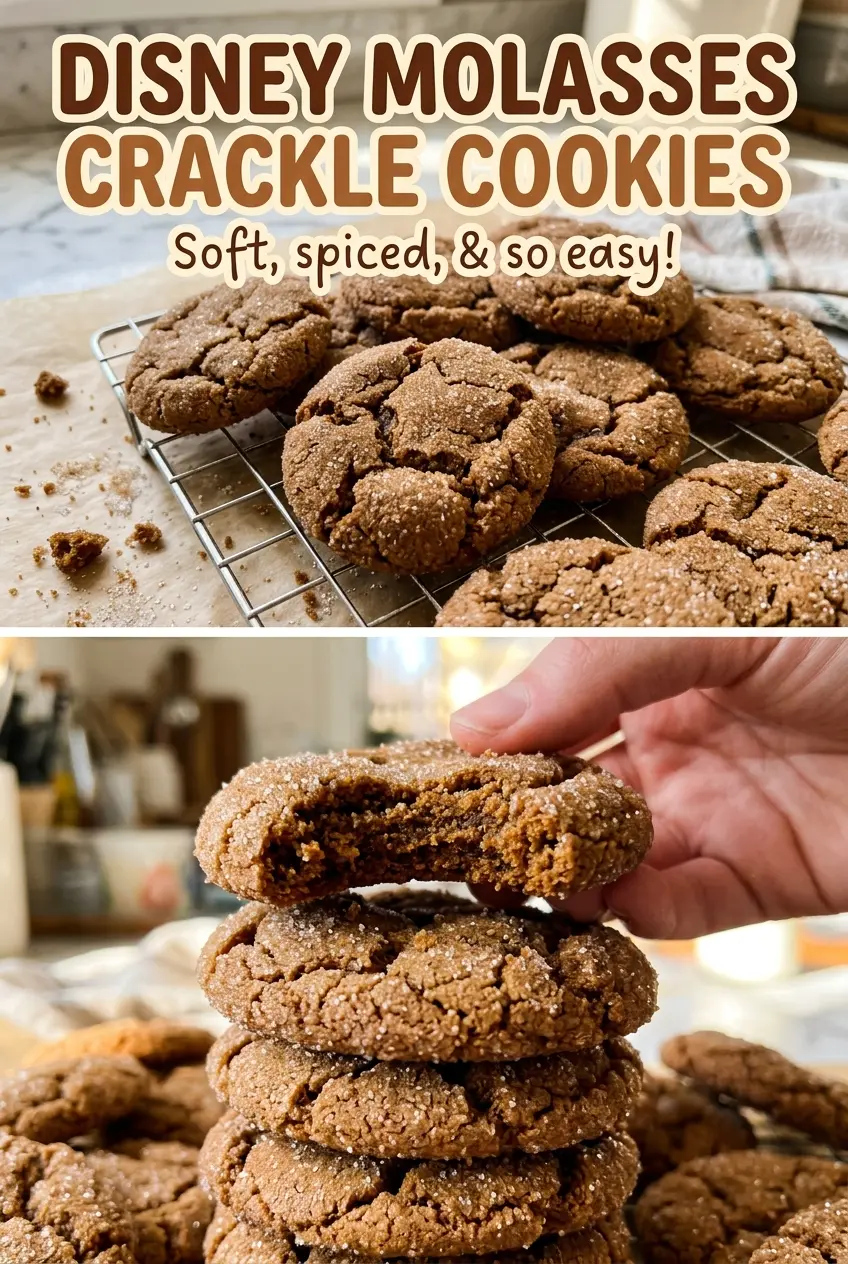
Save these Disney Molasses Crackle Cookies for a bake day when you want warm spice, crackled sugar tops, and soft centers.
What Makes the Sugar-Coated Tops Crack Instead of Staying Smooth
The crackle starts with the contrast between the rolled sugar outside and the soft dough underneath. In the oven, the dough expands; the thin outer coating stretches and breaks into the familiar craggy pattern. Baking soda helps the cookies rise and spread, while the brown sugar and molasses keep the dough moist enough for a tender center.
That’s also why a smooth, uncracked top isn’t fixed by baking the cookies longer. The coating needs to be on the outside of a rounded dough ball before it goes into the oven, and the dough needs to spread as it bakes. If the cracks are subtle, check that each portion has a complete sugar coating and that the oven is fully heated to 350°F before the sheet goes in. The cracks should appear during baking, not after the cookies have cooled.
Portioning matters, too. A tablespoon-sized ball gives the dough a small, even shape to expand from, so the surface has a chance to fracture while the center stays soft. Consistent portions make a more even batch than a mix of large and small cookies.
How Molasses, Butter, and the Spice Blend Shape These Crackles
- Unsulphured molasses — This brings the deep, rounded flavor and moisture that define the dough. Use unsulphured molasses for its mellow sweetness; there isn’t a direct replacement among the other ingredients that gives the same taste and texture. Measure it carefully, since a heavy extra pour can make the dough stickier.
- Softened butter and the two sugars — Softened butter creams smoothly with the granulated and light brown sugars, adding air to the dough before the egg and molasses go in. The brown sugar contributes moisture and a gentle caramel note. Use butter that yields to a finger but isn’t melted; melted butter won’t cream into the same fluffy mixture.
- All-purpose flour and baking soda — All-purpose flour gives the cookies enough structure to hold their shape, while baking soda supplies the lift and spread. Fresh baking soda matters more than choosing a premium flour; regular all-purpose flour is the right fit here. Don’t swap in self-rising flour, which would change the leavening and salt balance.
- Ground ginger, cinnamon, and cloves — The ginger leads, cinnamon rounds it out, and cloves bring a more concentrated warmth. Ground spices lose their punch as they sit, so use spices that still smell fragrant when you open the jars. The blend is intentionally made with ground spices; fresh ginger would add moisture and change how the dough handles.
- The large egg — It binds the creamed mixture and helps the cookies set as they bake. Stick with a large egg so the dough has the intended balance; a smaller egg can leave it drier, while a much larger one can make it looser.
- Granulated sugar for rolling — Ordinary granulated sugar is the right choice for a crisp, visible coating. No specialty sugar is needed, and its crystals stay distinct on the outside of the dough as the tops crack.
From Fluffy Butter to Crackled Tops: The Stages That Matter
Distribute the Spices Before Mixing the Dough
Heat the oven to 350°F and line two large baking sheets with parchment paper. Whisk the flour, baking soda, ginger, cinnamon, cloves, and kosher salt together in a medium bowl so the leavener and spices are spread through the flour. This quick whisk prevents a pocket of baking soda or clove from landing in one cookie. Set the bowl aside while you cream the butter and sugars.
Cream Until the Mixture Looks Fluffy
Beat the softened butter with the granulated sugar and packed light brown sugar using an electric mixer. Give it about 2 minutes, stopping to scrape the bowl if butter or sugar clings to the sides. The mixture should look lighter and fluffy rather than like dense, oily paste. Beat in the egg and molasses until combined, scraping down the bowl as needed.
Stop Mixing When the Flour Disappears
Add the flour mixture and mix on low just until no dry streaks remain. The dough should come together without looking heavily worked; continuing to mix after the flour disappears can make the cookies tougher. Cover the bowl and chill the dough for 30 minutes. That pause firms the soft dough enough to portion and roll.
Shape, Bake, and Let the Edges Set
Put the rolling sugar in a small bowl, scoop the dough into 1-tablespoon portions, and roll each portion into a ball before coating it in sugar. Arrange the balls about 2 inches apart on the prepared sheets, and bake one sheet at a time for 9 to 11 minutes. Look for crackled tops and set edges while the centers still look soft; fully firm centers in the oven will make a drier cookie. Cool each batch on its sheet for 5 minutes, then transfer the cookies to a wire rack to cool completely.
Small Changes That Keep These Molasses Cookies in Character
Make the spice gentler by leaving out the cloves
Omit the ground cloves and keep the ginger and cinnamon unchanged. You’ll still get a warmly spiced cookie, but the finish will be softer and less pungent. It’s a simple adjustment if clove tends to overpower your palate.
Use dark brown sugar for a deeper note
Replace the light brown sugar with the same volume of packed dark brown sugar. The cookies will have a fuller molasses-like taste and a darker color, while keeping the same basic mixing and shaping method.
Skip the sugar coating for a less-sweet finish
Roll the dough portions into balls but leave off the coating before baking. The cookies will have less sweetness and crunch on the outside, and their crackled pattern won’t be as pronounced.
Storage and Reheating
- Refrigerator: These don’t need refrigeration. Keep them in an airtight container at room temperature for up to 5 days; chilling can firm and dry the cookies.
- Freezer: Freeze completely cooled cookies in an airtight freezer-safe container, separating layers with parchment. They keep well for up to 3 months; thaw at room temperature.
- Reheating: Warm a cookie briefly in the microwave if you like it warm. Check it often, since too much heat can dry the center and toughen the edges.
Questions I Get Asked About These Molasses Crackle Cookies
Disney Molasses Crackle Cookies
Ingredients
Equipment
Method
- Heat the oven to 350°F.
- Line 2 large baking sheets with parchment paper.
- Whisk the flour, baking soda, ginger, cinnamon, cloves, and salt together in a medium bowl.
- In a large bowl, beat the butter, granulated sugar, and brown sugar with an electric mixer until fluffy, about 2 minutes.
- Beat in the egg and molasses until combined, scraping down the bowl as needed.
- Add the flour mixture and mix on low just until no dry streaks remain.
- Cover and chill the dough for 30 minutes.
- Put the rolling sugar in a small bowl.
- Scoop the dough into 1-tablespoon portions.
- Roll each portion into a ball.
- Coat each ball in sugar.
- Arrange the balls about 2 inches apart on the prepared sheets.
- Bake one sheet at a time for 9 to 11 minutes, until the cookies are crackled and the edges are set while the centers still look soft.
- Cool on the sheet for 5 minutes.
- Transfer the cookies to a wire rack to cool completely.