As the butter goes into the dough, the mixer bowl can look like a soft, sticky mess instead of the smooth brioche you hoped for. Keep kneading; the dough comes together gradually, and those buttery layers are what make these eggnog brioche cinnamon rolls tender rather than bready.
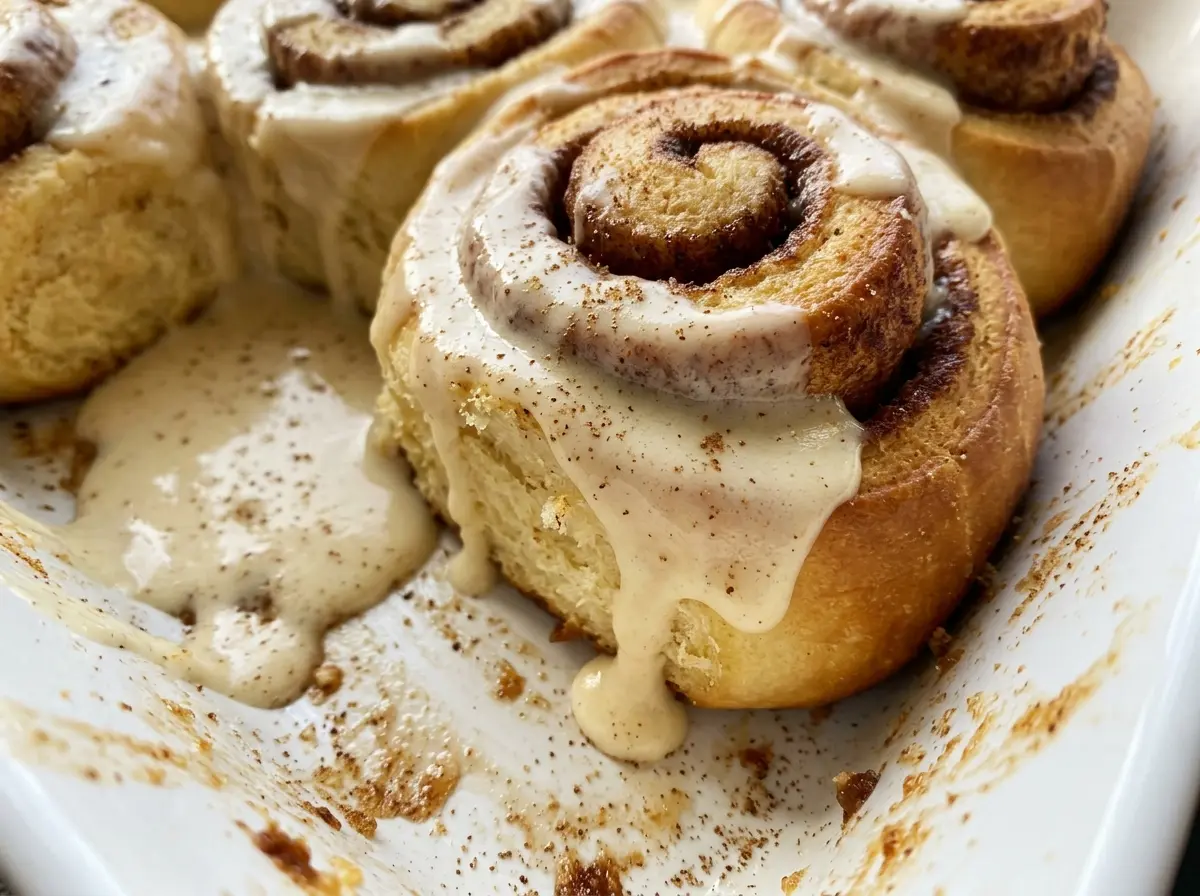
I like the contrast here: a lightly sweet dough with eggnog richness, then a cinnamon-brown sugar filling with just a hint of nutmeg. The eggnog goes into both the dough and the glaze, so its flavor carries through without overpowering the cinnamon. Once the rolls are baked and the glaze slips into their warm spirals, they’re soft, fragrant, and ready to pull apart.
Kitchen Note
The 30-minute chill after the first rise makes this buttery dough much easier to roll neatly. If it starts feeling floppy or sticking to the parchment, give it that full rest before shaping.
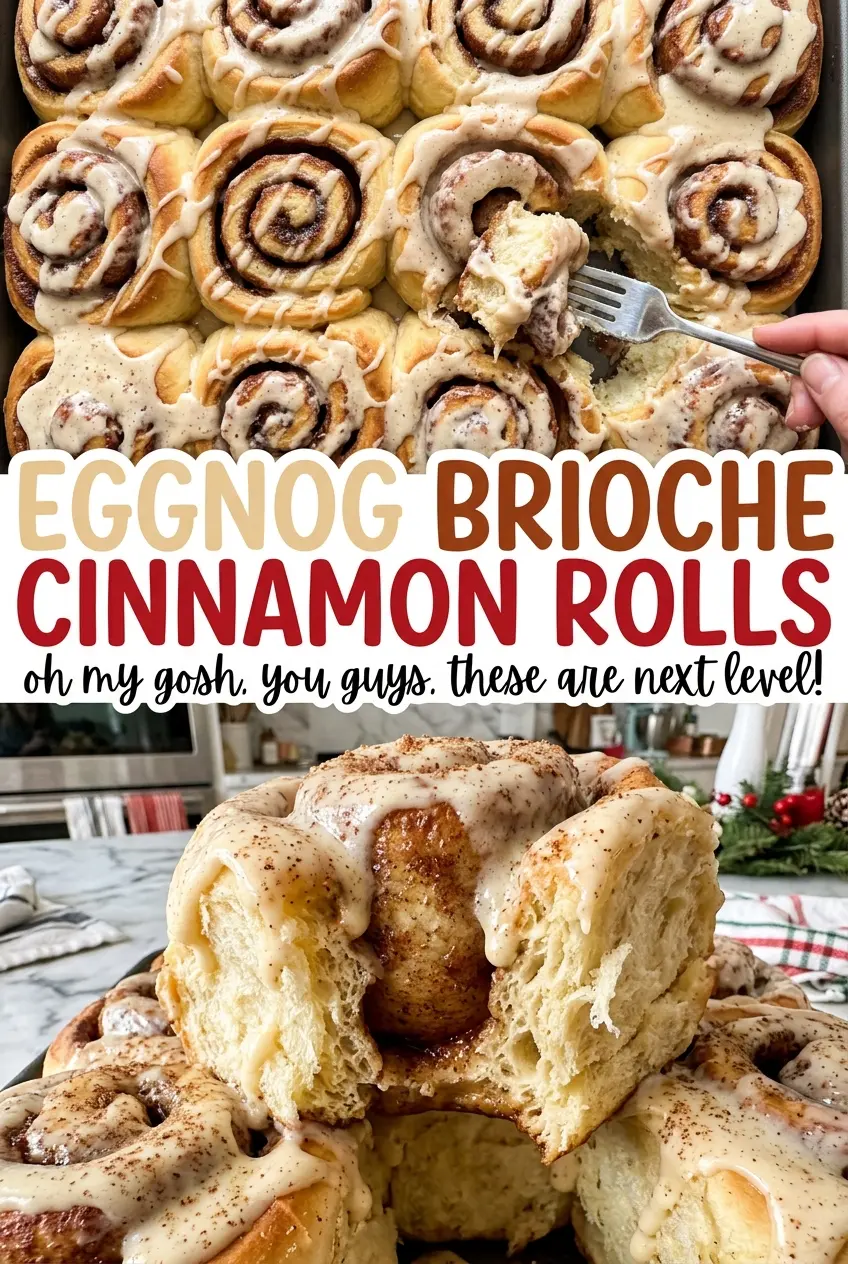
Save these eggnog brioche cinnamon rolls for a slow breakfast: tender buttery spirals, warm cinnamon filling, and a smooth eggnog glaze.
Why This Brioche Dough Should Feel Tacky, Not Dry
Enriched dough can make you want to keep adding flour as soon as it clings to the bowl. Resist that urge here. A slightly tacky feel is expected, and the dough should turn smooth and elastic as it kneads. Extra flour changes the balance of this soft dough and can leave the baked rolls heavier and less tender.
The order of mixing matters, too. Flour and eggs get worked together before the softened butter goes in, so the dough has a chance to develop structure first. Then the butter is added piece by piece instead of all at once. It takes patience, but the result is a supple dough that can hold the cinnamon filling and bake into a soft, pull-apart center.
Use the visual cues rather than trying to make the dough behave like a firm bread dough. It should feel tacky, not soupy, and look cohesive by the end of kneading. If you’re unsure, give it another minute in the mixer before reaching for more flour.
What Eggnog, Butter, and Spice Each Bring to These Rolls
- Eggnog — It gives the dough its seasonal richness and adds a matching note to the glaze. Use a familiar, good-tasting eggnog; its flavor is noticeable, while an especially thick variety may make the dough feel a little richer.
- Active dry yeast — This is what lifts the enriched dough through its two rises. Check that it foams after standing in the warm eggnog; if it stays flat, the yeast may not be active enough to raise the rolls reliably.
- All-purpose flour — Spoon it into the measuring cup and level the top rather than scooping directly from the bag, which packs in extra flour. That small measuring detail helps keep the dough soft and manageable.
- Unsalted butter — Softened butter gives the dough its tender texture and helps the filling spread smoothly. Use butter that yields when pressed but isn’t melted; melted butter can make the dough and filling harder to handle.
- Light brown sugar — Its moist texture melts into the cinnamon filling as the rolls bake. Pack it into the measuring cup so the filling has the intended sweetness and doesn’t turn out sparse.
- Cinnamon and nutmeg — Cinnamon gives the filling its familiar warmth, while nutmeg echoes the eggnog. Fresh, fragrant spices make a more noticeable difference here than buying a premium brand of sugar.
- Powdered sugar and vanilla — Powdered sugar makes a smooth, pourable glaze, and vanilla rounds out the eggnog. Sift the sugar if it has stubborn lumps, so you don’t have to whisk them out later.
From Foamy Yeast to Soft, Glazed Spirals
Wake the Yeast Gently
Warm the eggnog to 100–110°F, then pour it into the stand mixer bowl and stir in the yeast with 1 tablespoon of the sugar. Let it stand for 5–10 minutes, until a foamy layer forms on top. If the liquid is too hot, it can harm the yeast; use a thermometer instead of guessing by touch.
Knead Until the Butter Disappears
Add the eggs, remaining sugar, flour, and salt, then mix with the dough hook on low until a shaggy dough forms. Knead on medium-low for 5 minutes, then add the softened butter a piece at a time, waiting for each piece to incorporate. Knead for 8–10 minutes more, until the dough looks smooth and elastic while remaining tacky. Transfer it to a greased bowl, cover, and let it rise until doubled, about 1–1 1/2 hours.
Roll Out the Filling in an Even Layer
Refrigerate the risen dough for 30 minutes and grease a 9×13-inch baking dish. Stir together the brown sugar, cinnamon, and nutmeg, then roll the dough on parchment into a 12×18-inch rectangle. Spread the softened butter over the dough and scatter the sugar mixture evenly across it. Even coverage gives each spiral a balanced stripe of filling.
Shape, Proof, and Bake the Rolls
Starting at a long edge, roll the dough into a log and cut it into 12 equal rolls. Arrange them cut-side up in the prepared dish, cover loosely, and let them rise until puffy, 45–75 minutes; heat the oven to 350°F during this rise. Bake for 25–30 minutes, until golden brown and the center roll registers 190°F. Let the pan rest for 10 minutes before glazing.
Whisk the Eggnog Glaze
Whisk the powdered sugar, eggnog, and vanilla until smooth. Drizzle the glaze over the warm rolls so it settles into the cinnamon swirls without disappearing completely. If you pour it on while the rolls are piping hot, more of it will melt into the centers; the short rest in the pan gives the glaze a better surface to cling to.
Three Small Changes for a Different Batch
Make the rolls dairy-free
Replace the eggnog with an equal amount of dairy-free eggnog, including in the glaze, and use dairy-free butter sticks in both the dough and filling. The rolls will still contain eggs, and the flavor and richness will depend on the dairy-free products you choose.
Keep the filling cinnamon-forward
Leave out the nutmeg if you prefer a more straightforward cinnamon roll. The brown sugar and cinnamon still make a fragrant filling, but you’ll lose the extra warm note that ties it to the eggnog.
Serve the glaze on the side
Leave the warm rolls unglazed and serve the whisked eggnog glaze alongside them. The tops stay less sticky, and each person can add as much glaze as they like.
Storage and Reheating
- Refrigerator: Store covered for up to 4 days. The rolls will firm up as they chill, so warm them gently before serving.
- Freezer: Freeze baked, unglazed rolls in an airtight container for up to 2 months. Thaw them in the refrigerator, then warm and glaze before serving.
- Reheating: Warm individual rolls in the microwave in short bursts until soft, or cover the baking dish and warm it in a low oven. Avoid heating uncovered for too long, which dries the edges before the centers warm through.
Questions That Come Up When Making Eggnog Brioche Rolls
Eggnog Brioche Cinnamon Rolls
Ingredients
Equipment
Method
- Warm the eggnog to 100–110°F.
- Pour the warm eggnog into the bowl of a stand mixer.
- Stir in the yeast and 1 tablespoon of the sugar.
- Let stand for 5–10 minutes, until foamy.
- Add the eggs, remaining sugar, flour, and salt, then mix with the dough hook on low until a shaggy dough forms.
- Knead on medium-low for 5 minutes.
- Add the butter a piece at a time, kneading until each piece is incorporated.
- Knead for 8–10 minutes, until the dough is smooth, elastic, and tacky.
- Transfer the dough to a greased bowl.
- Cover and let rise until doubled, 1–1 1/2 hours.
- Refrigerate the risen dough for 30 minutes.
- Grease a 9x13-inch baking dish.
- Stir together the brown sugar, cinnamon, and nutmeg.
- Roll the dough on parchment into a 12x18-inch rectangle.
- Spread the softened butter over the dough.
- Sprinkle the sugar mixture evenly over the dough.
- Starting at a long edge, roll the dough into a log.
- Cut the log into 12 equal rolls.
- Arrange the rolls cut-side up in the prepared dish.
- Cover loosely and let rise until puffy, 45–75 minutes, while the oven heats to 350°F.
- Bake for 25–30 minutes, until golden brown and the center roll registers 190°F.
- Rest in the pan for 10 minutes.
- Whisk the powdered sugar, eggnog, and vanilla until smooth.
- Drizzle the glaze over the warm rolls.