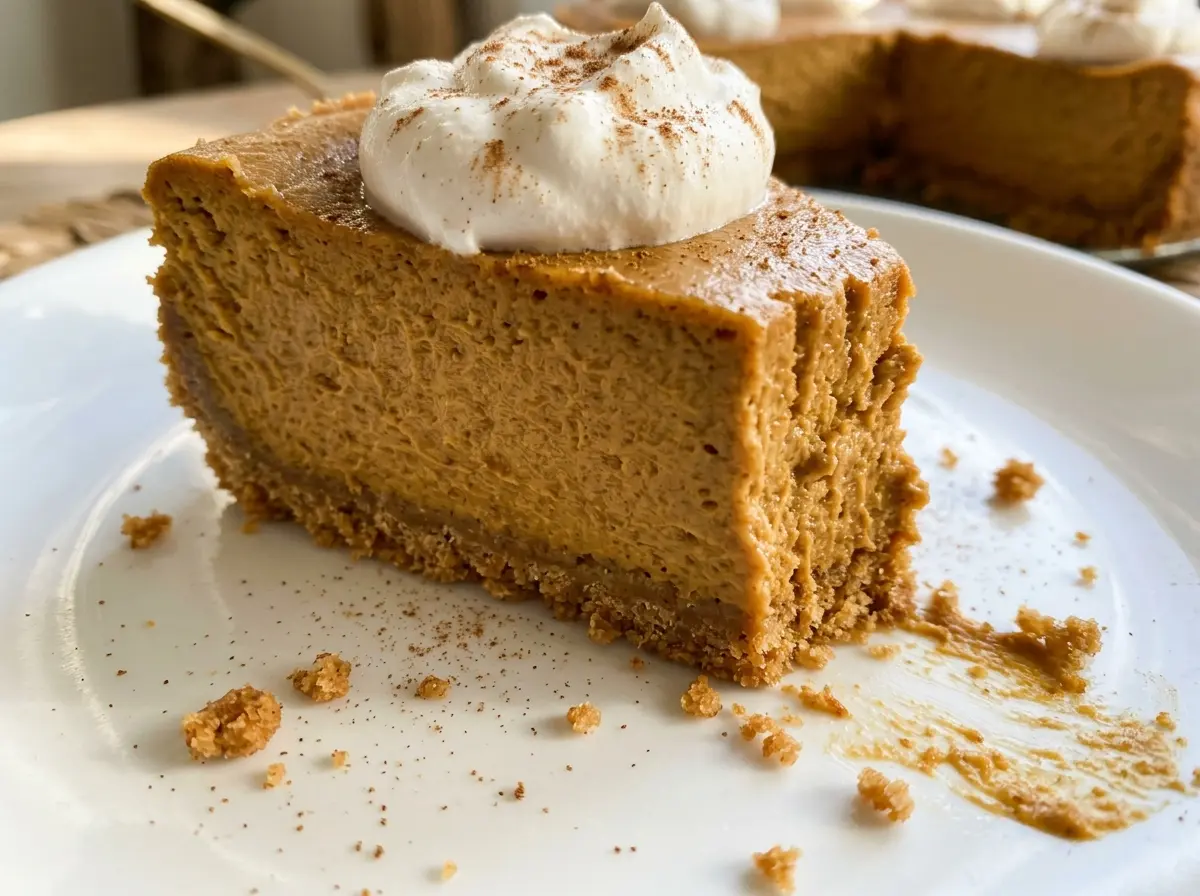
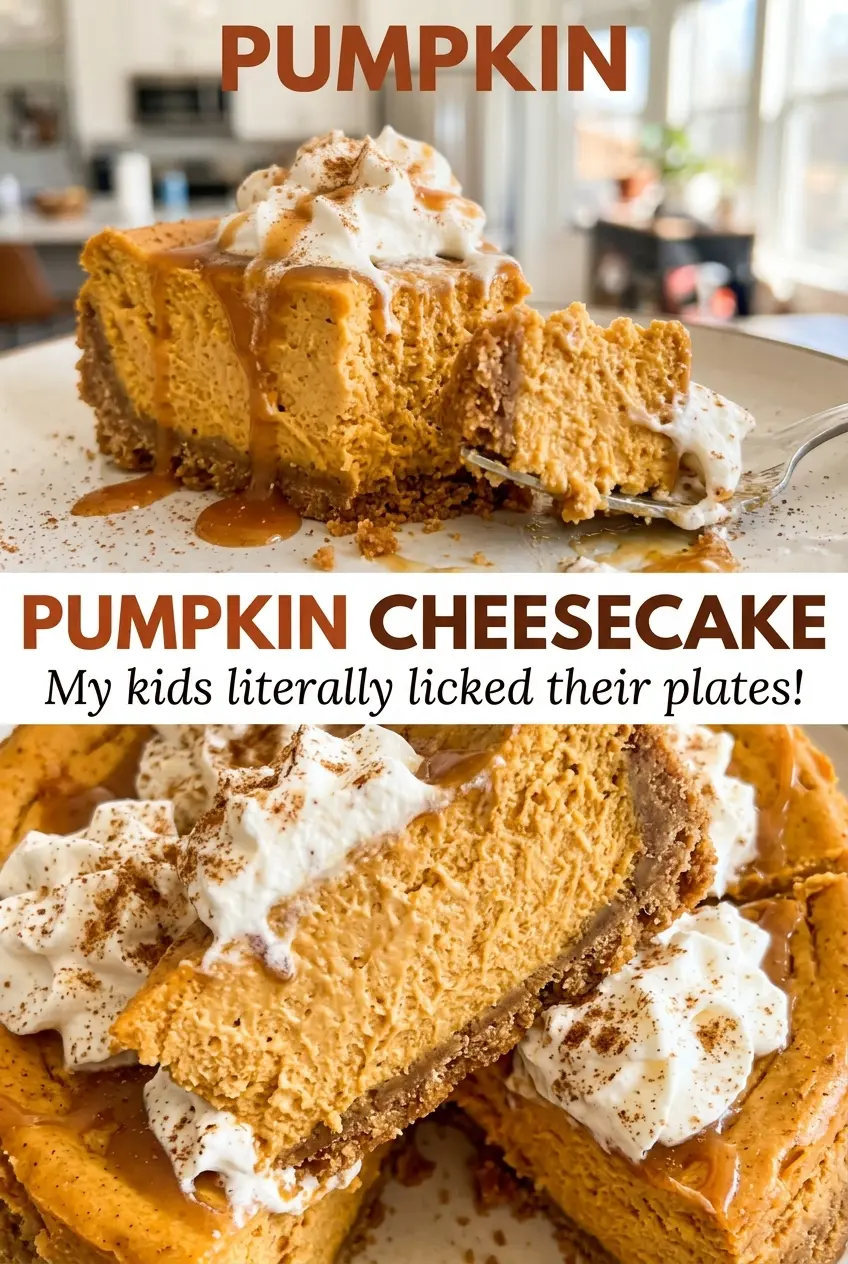
The graham crust smells toasted before the pumpkin filling even goes in, and that little cue is a good reminder not to rush the first bake. This pumpkin cheesecake has a buttery crumb base and a smooth filling flavored with cinnamon, ginger, and nutmeg. Its center should still move slightly when the pan is nudged; a firm center in the oven can turn into an overbaked, dry slice later.
I build the filling on softened cream cheese, then add pumpkin and sour cream for a creamy texture with a little tang. A small amount of flour helps the filling hold together, while the eggs give it its set. The slow, staged cooling is part of the bake, not an afterthought, and it helps this pumpkin cheesecake settle into clean slices with a tender middle.
Kitchen Note
Room-temperature eggs blend more easily into softened cream cheese. I set them out before I start the crust, so I’m not tempted to beat the filling longer just to work out little lumps.
Save this pumpkin cheesecake for a make-ahead dessert with a spiced filling and buttery graham crust.
Why the Gentle Cool Matters More Than Another Five Minutes in the Oven
A cheesecake keeps cooking from its own retained heat after you switch off the oven. If you take it straight from a hot oven into a cooler room, the filling contracts quickly, which can pull the surface into cracks. Leaving the door propped open lets the temperature come down gradually; the rack cooling that follows continues the transition without trapping heat inside the pan.
This slow landing works alongside the doneness cue, not instead of it. The edges should look set while the center still has a slight wobble when nudged. Don’t keep baking until the middle looks completely firm, and don’t try to rush the cooling by putting a warm cheesecake straight into the refrigerator. The staged rest gives the filling time to settle before its long chill, so the texture stays creamy rather than tight and the top is less likely to split.
Pumpkin Purée, Sour Cream, and the Ingredients That Shape the Slice
- Graham cracker crumbs — Fine, evenly crushed crumbs pack into a more uniform base than large uneven pieces. Store-bought crumbs work well; the melted butter should leave the mixture evenly moistened rather than dusty.
- Cream cheese — This is the filling’s main structure, so use regular brick-style cream cheese rather than a soft, spreadable tub product. Softening it before mixing makes it easier to get a smooth base without beating in excess air.
- Canned pumpkin purée — Choose plain pumpkin purée, not pumpkin pie filling, which is already sweetened and spiced. The canned version gives you a consistent thickness; watery homemade purée can loosen the filling and change how it sets.
- Sour cream — Its gentle tang keeps the filling from tasting heavy and contributes to the creamy texture. Plain Greek yogurt can stand in at the same amount, though its tang is a little more pronounced.
- All-purpose flour — A little flour helps the pumpkin-rich filling hold a neat slice. For a gluten-free adaptation, use a cup-for-cup gluten-free baking flour in its place; the texture may be slightly less delicate.
- Warm spices — Cinnamon leads, while ginger and nutmeg add a deeper, rounded warmth. Fresh, fragrant spices matter more here than choosing a premium brand; pumpkin pie spice can replace the separate spices, with a more blended flavor.
- Eggs — The eggs give the filling its set, so there isn’t a simple swap that keeps the same classic cheesecake texture. Room-temperature eggs incorporate smoothly and are less likely to leave the batter streaky.
From Fragrant Crust to a Gently Set Center
Pack and prebake the graham base
Heat the oven to 350°F and lightly coat the bottom and sides of a 9-inch springform pan with nonstick cooking spray. Stir the graham cracker crumbs with the sugar, then mix in the melted butter until every crumb looks evenly moistened. Press the mixture firmly across the bottom and about 1 inch up the sides. Bake for 8 to 10 minutes, until fragrant, then set the pan on a rack and lower the oven to 325°F.
Mix the filling until smooth
Beat the softened cream cheese and sugar in a large bowl with an electric mixer on medium speed. Stop to scrape the bowl as needed, especially where cream cheese can cling to the bottom and sides. Beat in the pumpkin purée and sour cream, then mix in the flour, vanilla, cinnamon, ginger, nutmeg, and salt until the filling looks smooth. If you see cream cheese streaks, scrape the bowl before moving on.
Add the eggs with a light hand
Switch to low speed and add the eggs one at a time, mixing only until each one disappears into the filling. Overbeating at this point works extra air into the batter, which can contribute to a puffed surface that falls as the cheesecake cools. Scrape down the bowl if needed, but stop mixing once the eggs are incorporated. Pour the filling into the prepared crust.
Bake, then let the temperature fall slowly
Bake at 325°F for 65 to 75 minutes, until the edges are set and the center still jiggles slightly when you gently nudge the pan. Turn off the oven, prop the door open slightly, and leave the cheesecake inside for 1 hour. Cool it on a rack at room temperature for 1 hour, then cover and refrigerate for at least 6 hours, until thoroughly chilled. Release the springform sides only after that chill.
Two Useful Ways to Adapt This Pumpkin Cheesecake
Give the crust a gingersnap edge
Replace the graham crumbs with the same volume of finely crushed gingersnaps and leave out the crust sugar, since the cookies are already sweet. Keep the melted butter and baking method the same. The base will taste more warmly spiced and a little sweeter than the classic graham version.
Make it gluten-free
Use gluten-free graham-style crumbs for the crust and a cup-for-cup gluten-free baking flour in the filling, each in place of its wheat-based counterpart. Keep the other ingredients and the baking method unchanged. The crumb base may be a touch more delicate, so press it firmly into the pan before prebaking.
Storage and Reheating
- Refrigerator: Keep the cheesecake covered and refrigerated for 3 to 4 days. The crust softens a little as it sits, but the filling stays creamy.
- Freezer: Freeze individual slices wrapped tightly and stored in an airtight container for up to 2 months. Thaw them overnight in the refrigerator for the best texture.
- Reheating: This cheesecake is served chilled, so don’t reheat it. Microwaving can soften the filling unevenly and make the crust greasy.
Questions That Come Up Before the First Slice
Pumpkin Cheesecake
Ingredients
Equipment
Method
- Heat the oven to 350°F.
- Lightly coat the bottom and sides of a 9-inch springform pan with nonstick cooking spray.
- Stir the graham cracker crumbs and sugar together.
- Mix in the melted butter until evenly moistened.
- Press the crumb mixture firmly over the bottom and about 1 inch up the sides of the pan.
- Bake the crust for 8 to 10 minutes, until fragrant.
- Set the pan on a rack.
- Reduce the oven temperature to 325°F.
- Beat the cream cheese and sugar in a large bowl with an electric mixer on medium speed until smooth, scraping the bowl as needed.
- Beat in the pumpkin puree and sour cream.
- Mix in the flour, vanilla, cinnamon, ginger, nutmeg, and salt until smooth.
- Add the eggs one at a time, mixing on low speed just until each is incorporated; do not overbeat.
- Pour the filling into the crust.
- Bake at 325°F for 65 to 75 minutes, until the edges are set and the center still jiggles slightly when the pan is gently nudged.
- Turn off the oven and prop the door open slightly.
- Leave the cheesecake inside for 1 hour.
- Cool on a rack at room temperature for 1 hour.
- Cover and refrigerate the cheesecake for at least 6 hours, until thoroughly chilled.
- Release the springform sides before serving.