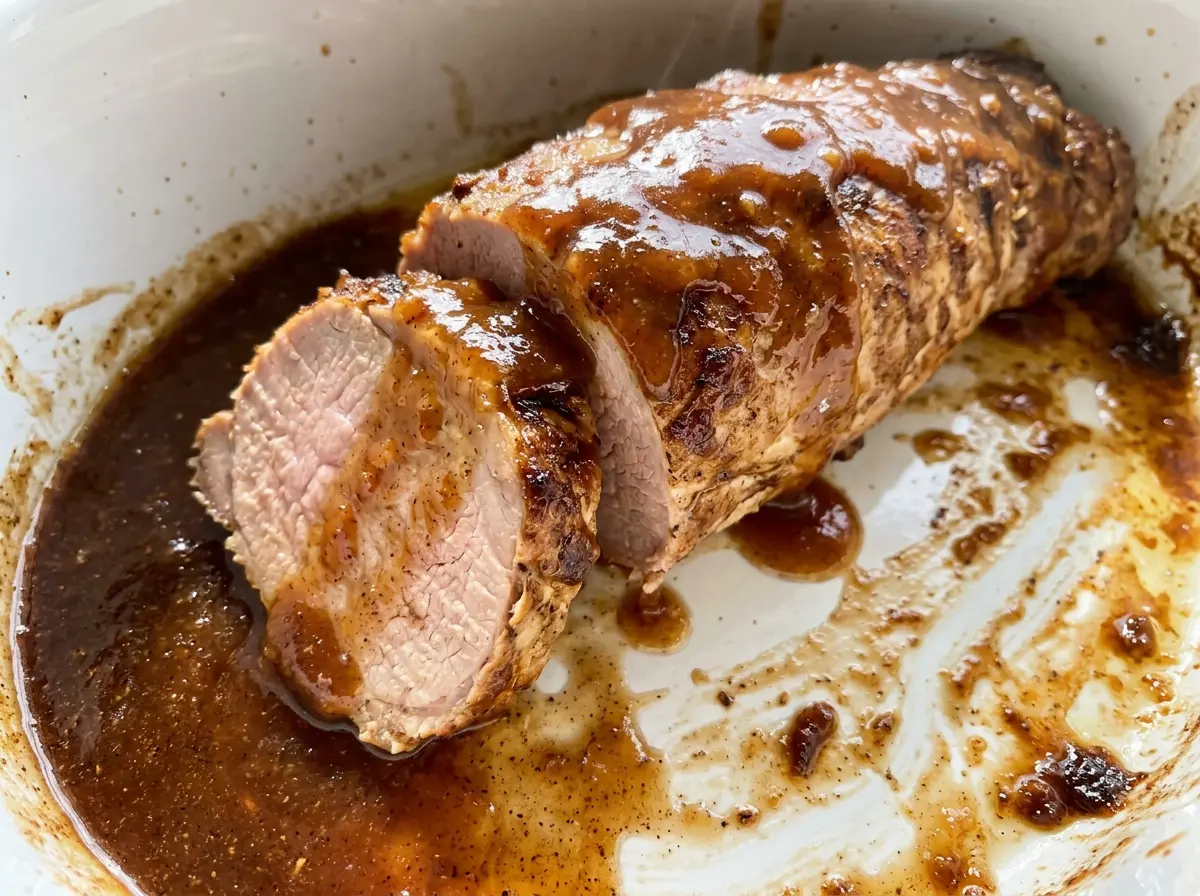
When the lid comes off, the apple butter has settled into a dark, shiny coat around the pork, with soft onions tucked underneath. That’s when this slow cooker apple butter glazed pork tenderloin starts to look like more than a hands-off dinner. I brown the tenderloins first, then let them cook in a glaze that balances apple sweetness with a little tang. The cut is lean, so I pay attention to the pork itself instead of trusting the clock alone.
Apple butter gives the glaze body, while apple cider vinegar and Dijon keep it from tasting too sweet. Once the pork has rested, I strain the cooking liquid and simmer it briefly with a cornstarch slurry. That last step turns the thin liquid in the cooker into a glossy sauce that clings to each slice. The finished pork is tender beneath a shiny, savory-sweet apple glaze.
Kitchen Note
The pork needs a little breathing room while the sauce comes together. Tent it loosely with foil during its rest so the surface doesn’t get trapped in steam.
Save this slow cooker apple butter glazed pork tenderloin for a dinner with tender slices and a glossy, tangy-sweet sauce.
Why Pork Tenderloin Needs a Shorter Slow-Cooker Window Than You Expect
Pork tenderloin cooks differently from a larger, fattier cut meant for hours of braising. It’s lean and relatively small, so a long stretch in the slow cooker can take it past tender and leave it dry. The useful shift is to treat the cooker as a way to gently cook the pork in its glaze, not as a reason to leave it unattended all afternoon.
The two tenderloins may not be identical in thickness, and the thickest point is what matters when you check for doneness. Test each one rather than assuming both are ready because they shared the same cooker. A reliable instant-read thermometer gives you a clear answer, while the time range accounts for differences among slow cookers. Taking the pork out when it reaches the right temperature protects its texture; the short rest gives you time to finish the sauce without leaving the meat in the hot cooking liquid.
What Gives the Apple Butter Glaze Its Sweet-Tart Balance

- Pork tenderloins — This cut cooks quickly and stays tender when it isn’t left in the cooker past its doneness point. Have the silver skin removed so the finished slices are easy to cut and eat.
- Apple butter — It supplies concentrated apple flavor and gives the glaze more body than cider alone. A smooth, spoonable apple butter whisks into the other ingredients easily; there isn’t a close one-for-one replacement among the ingredients here.
- Apple cider and apple cider vinegar — Cider carries the apple flavor through the sauce, while vinegar adds a sharper edge that balances the sweetness. They do different jobs, so leaving out either one changes the glaze’s balance.
- Dijon mustard, garlic, and dried thyme — Dijon brings a savory tang, garlic adds depth, and thyme keeps the apple notes from taking over. Dried thyme blends right into the glaze; there’s no need to chop or bloom it first.
- Cornstarch — This is what thickens the strained cooking liquid into a spoonable glaze. Mix it with cold water before adding it to the hot liquid; the sauce gets its shine from simmering after the slurry is whisked in.
From a Skillet Sear to a Glossy Apple Pan Sauce
Brown the Tenderloins on Every Side
Pat the pork dry, then season it all over with kosher salt and black pepper. Heat neutral oil in a 12-inch skillet over medium-high heat and brown the tenderloins on all sides, about 6 to 8 minutes total. Look for browned patches across the surface rather than a pale exterior. Turning the meat around the skillet helps color the sides evenly.
Whisk the Apple Butter Glaze Smooth
In a medium bowl, whisk together the apple butter, apple cider, apple cider vinegar, Dijon mustard, minced garlic, and dried thyme. Keep whisking until the mixture looks smooth and the mustard is evenly dispersed. The glaze should be pourable, with no streaks of mustard or clumps of apple butter. Set it aside while you arrange the slow cooker.
Let the Pork Cook in the Glaze
Scatter the sliced yellow onion in the bottom of a 6-quart slow cooker and set the tenderloins on top. Pour the glaze over the pork, cover, and cook on LOW for 2 1/2 to 3 1/2 hours or HIGH for 1 1/2 to 2 1/2 hours. Check the thickest part of each tenderloin with a thermometer; both need to reach 145°F. The center should be cooked through but still juicy, not firm from prolonged cooking.
Rest the Meat and Thicken the Cooking Liquid
Move the pork to a cutting board, tent it loosely with foil, and let it rest for at least 3 minutes. Strain the cooking liquid into a small saucepan and discard the onion. In a small bowl, whisk the cornstarch with cold water, then whisk that slurry into the liquid. Simmer over medium heat for 2 to 3 minutes, until the sauce looks glossy and thickened.
Slice Crosswise and Spoon on the Sauce
Cut the tenderloins crosswise into slices so each piece is easy to serve. Arrange the pork on a platter or individual plates, then spoon the thickened glaze over the top. Add the sauce just before serving so the shiny coating stays visible on the slices.
Simple Ways to Change the Apple Butter Pork
Make the glaze gluten-free
Use gluten-free apple butter and gluten-free Dijon mustard. The cornstarch slurry already thickens the sauce without flour, so this change keeps the glaze’s texture close to the original while making the condiment choices suitable for a gluten-free meal.
Leave out the dried thyme
Omit the thyme for a cleaner apple-and-mustard glaze. You’ll lose its earthy herbal note, but the apple butter, vinegar, Dijon, and garlic still make a balanced sauce.
Skip the onion bed
Leave out the sliced onion if you want to avoid onion in the cooking liquid. The pork and glaze still cook together, though the strained sauce will have a slightly less savory base.
Storage and Reheating
- Refrigerator: Refrigerate the pork and glaze in a covered container within 2 hours; they keep for 3 to 4 days. The chilled glaze will firm up, and the lean pork will feel firmer when cold.
- Freezer: Freeze sliced pork with some glaze in an airtight freezer-safe container for up to 2 to 3 months for best quality. Thaw it in the refrigerator before reheating.
- Reheating: Warm the pork gently, covered, with some glaze in a skillet or microwave, until leftovers reach 165°F. Avoid prolonged high heat, which can dry out the tenderloin.
Questions That Come Up With Slow Cooker Pork Tenderloin
Slow Cooker Apple Butter Glazed Pork Tenderloin
Ingredients
Equipment
Method
- Pat the pork dry.
- Season the pork all over with the salt and pepper.
- Heat the oil in a 12-inch skillet over medium-high heat.
- Brown the tenderloins on all sides, about 6 to 8 minutes total.
- Whisk the apple butter, apple cider, vinegar, Dijon, garlic, and thyme in a medium bowl until smooth.
- Scatter the onion in a 6-quart slow cooker.
- Place the tenderloins on top of the onion.
- Pour the glaze over the pork.
- Cover and cook on LOW for 2 1/2 to 3 1/2 hours or HIGH for 1 1/2 to 2 1/2 hours, until each tenderloin reaches 145°F in its thickest part.
- Transfer the pork to a cutting board.
- Tent the pork loosely with foil and rest for at least 3 minutes.
- Strain the cooking liquid into a small saucepan and discard the onion.
- Whisk the cornstarch and cold water together.
- Whisk the slurry into the cooking liquid.
- Simmer over medium heat for 2 to 3 minutes, until glossy and thickened.
- Slice the pork crosswise.
- Spoon the glaze over the slices.