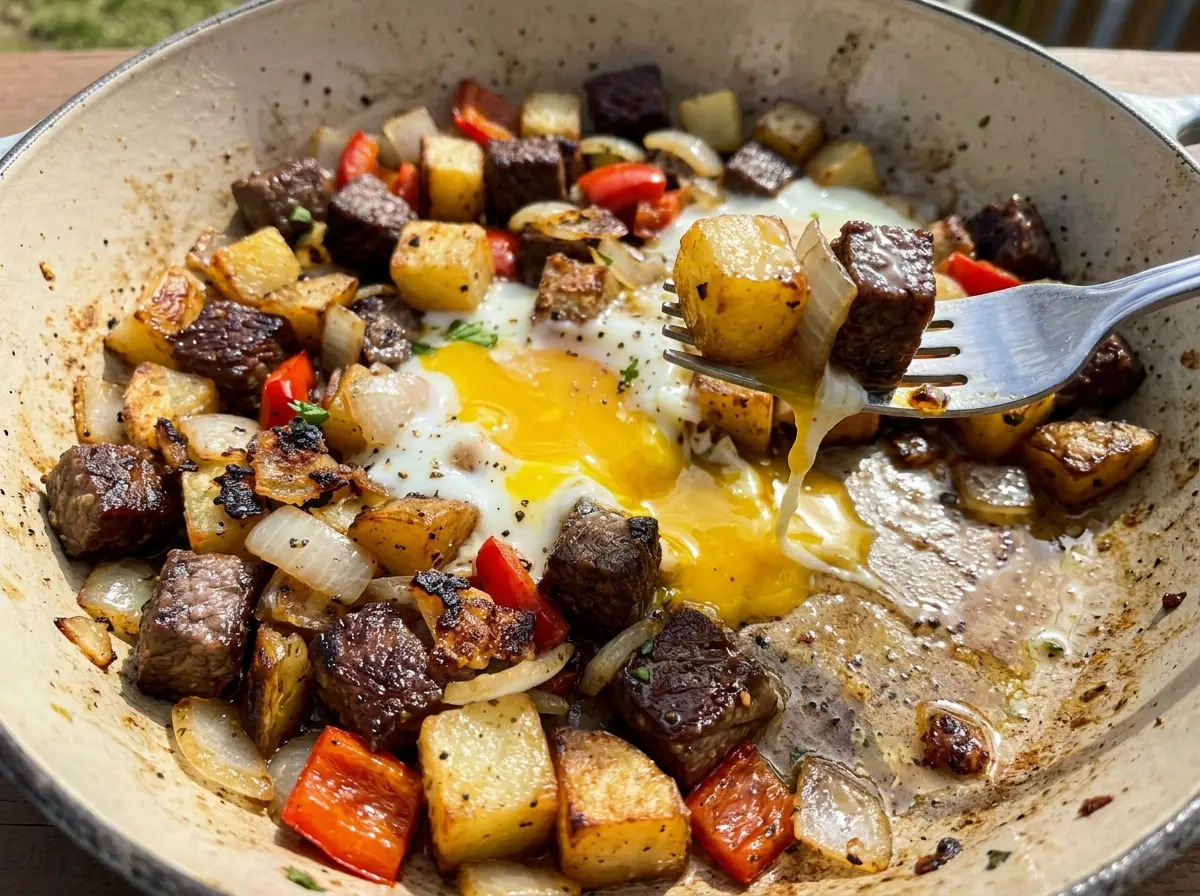
The first thing I notice when this hash comes together is the sound: potatoes crackling in the skillet while the steak rests on the cutting board. I used to rush the vegetables in too early, and the potatoes softened before they had a chance to brown. Now I give them their own time in the pan, then fold everything together at the end.
For Steak and Potato Breakfast Hash, Yukon golds make a hearty base, and sirloin brings enough beefy flavor without taking over the skillet. The red pepper and onion turn tender beside the potatoes, while smoked paprika adds a warm, smoky note. It’s a satisfying breakfast, but I’d happily make it for dinner, too.
The best bites have a little contrast: browned potato edges, tender vegetables, and steak that stays juicy after it’s cut. That’s what I aim for when I bring the skillet to the table.
Kitchen Note
I stir the parsley in only at the finish, along with the steak. A minute or two in the hot skillet warms it without cooking away its fresh, green flavor.
Save this Steak and Potato Breakfast Hash for a skillet breakfast with crisp-edged potatoes, tender peppers, and juicy sirloin.
Why Raw Potatoes Don’t Get That Crisp, Golden Finish
Raw potato cubes need a long time in the skillet before their centers soften. By then, the outside can dry out unevenly, and the onion and pepper may be ready long before the potatoes are. Giving the Yukon golds a short boil first takes care of the inside, so the skillet can focus on browning.
Moisture on the surface is the other thing that works against crisp edges. Once the potatoes are drained, letting them steam-dry gives excess water a chance to escape instead of turning into steam in the pan. That matters because potatoes brown when their surfaces meet the hot oil; if they’re wet, they tend to soften before they color.
It’s also why the onion and bell pepper go in after the potatoes have had their skillet time. They release moisture as they cook, and adding them earlier would slow the browning you’ve already built. Let each part do its job in sequence, and the finished hash has distinct textures instead of a soft, crowded pile.
What Yukon Golds and Sirloin Bring to This Skillet

- Yukon gold potatoes — Their creamy centers hold together well in a hash, with enough starch on the surface to brown. You don’t need specialty potatoes; choose firm ones without soft spots. Russets work in a pinch, but they’re more prone to breaking, so turn them gently.
- Sirloin steak — A boneless piece about an inch thick gives you a good balance of seared exterior and tender pieces for the skillet. There’s no need to pay for a premium steak here; a fresh, evenly thick cut is more useful than extra marbling. A similarly thick boneless strip steak is the closest swap, though it has a richer taste; cook to the same temperature rather than relying only on the clock.
- Neutral oil — Canola or vegetable oil works in place of another neutral oil, measure for measure. A neutral option lets the steak and smoked paprika come through without adding a competing flavor, and the everyday grocery-store bottle is fine.
- Yellow onion and red bell pepper — Fresh, firm vegetables are worth choosing because they soften in the skillet without turning watery or limp. A yellow or orange bell pepper can replace the red one in the same dice; the hash will taste a little less sweet but will cook in the same way.
- Smoked paprika — This brings the skillet’s smoky background, so it’s the ingredient where freshness matters most; an old jar can taste flat. Sweet paprika can replace it measure for measure, but you’ll lose the smoke. There’s no need to buy an expensive brand.
- Fresh parsley — It gives the finished hash a clean herbal lift. Cilantro can stand in for it in the same chopped amount if you like a more assertive, citrusy herb; add it at the same final stage.
Build the Hash in Stages for Better Browning
Boil the Potatoes Until Barely Tender
Bring the water and 2 teaspoons of the kosher salt to a boil in a large pot, then add the cubed potatoes. Cook for 6–8 minutes, just until a knife meets a little resistance in the center; they shouldn’t be soft enough to crumble. Drain them well and let them steam-dry while you move on to the steak. If they’re already falling apart, they’ve gone too far for easy skillet turning.
Sear the Steak Whole, Then Let It Rest
Season the sirloin with 1/2 teaspoon of the remaining salt and the black pepper. Heat 1 tablespoon of neutral oil in a 12-inch skillet over medium-high heat, then cook the steak for 3–5 minutes per side until it reaches 145°F. Move it to a cutting board and leave it undisturbed for 3 minutes before cutting it into bite-size pieces. Cutting too soon lets juices run onto the board instead of staying with the steak.
Give the Potatoes Their Skillet Time
Add the remaining oil to the skillet, followed by the potatoes, remaining salt, and smoked paprika. Cook for 10–12 minutes, turning occasionally, until the cubes have browned, crisp spots. They don’t need to be uniformly dark on every side; look for a mix of golden edges and tender centers. If you turn them constantly, they won’t stay in contact with the hot skillet long enough to brown.
Soften the Vegetables and Finish the Hash
Add the diced onion and red bell pepper, then cook for 5–6 minutes, stirring occasionally, until tender. The vegetables should soften without losing their shape. Stir in the rested steak pieces and chopped parsley, then cook for 1–2 minutes, just until the steak is hot. Take the skillet off the heat once everything is warmed through so the steak doesn’t spend extra time cooking.
Small Changes for a Different Steak and Potato Hash
Leave Out the Red Pepper
Skip the red bell pepper and keep the rest of the ingredients and method the same. The hash will have less sweetness and a little more room for the steak and smoky potatoes to stand out; cook the onion until tender as usual.
Make It Without Smoked Paprika
Omit the smoked paprika if you want a cleaner potato-and-steak flavor without the smoky note. Nothing else in the skillet needs to change, though the potatoes will taste less smoky and a little less rounded.
Cut the Steak into Strips
After resting, slice the steak into short strips instead of bite-size pieces, then fold them into the skillet at the finish. The larger pieces make the hash feel more steak-forward and give each serving a few substantial bites; the final warming step stays brief.
Storage and Reheating
- Refrigerator: Store leftovers in a covered container for 3–4 days. The potatoes will lose some of their crisp edges as they chill.
- Freezer: I don’t recommend freezing this hash; the cooked potatoes soften and lose their appealing texture after thawing.
- Reheating: Warm leftovers in a skillet over medium heat until they reach 165°F throughout. A small splash of neutral oil helps the potatoes brown again; avoid overheating the steak while waiting for the skillet to warm.
Questions That Come Up When Making This Hash
Steak and Potato Breakfast Hash
Ingredients
Equipment
Method
- Bring the water and 2 teaspoons of the salt to a boil in a large pot.
- Add the potatoes and cook for 6–8 minutes, until just barely tender.
- Drain the potatoes well and let them steam-dry.
- Season the steak with 1/2 teaspoon of the remaining salt and the black pepper.
- Heat 1 tablespoon of the oil in a 12-inch skillet over medium-high heat.
- Cook the steak for 3–5 minutes per side until it reaches 145°F.
- Transfer the steak to a cutting board to rest for 3 minutes.
- Cut the steak into bite-size pieces.
- Add the remaining 2 tablespoons oil to the skillet, then add the potatoes, remaining 1/2 teaspoon salt, and smoked paprika.
- Cook for 10–12 minutes, turning occasionally, until browned and crisp in spots.
- Add the onion and bell pepper and cook for 5–6 minutes, stirring occasionally, until tender.
- Stir in the steak and parsley.
- Cook for 1–2 minutes, until the steak is hot.