The sweet potatoes can look browned on the outside while still being stubbornly firm in the middle. I used to keep cooking them uncovered, which only made the edges darker before the centers softened. For this Sweet Potato Breakfast Hash, a little water and a covered skillet do the early work; uncovering the pan afterward gives the potatoes a chance to brown.
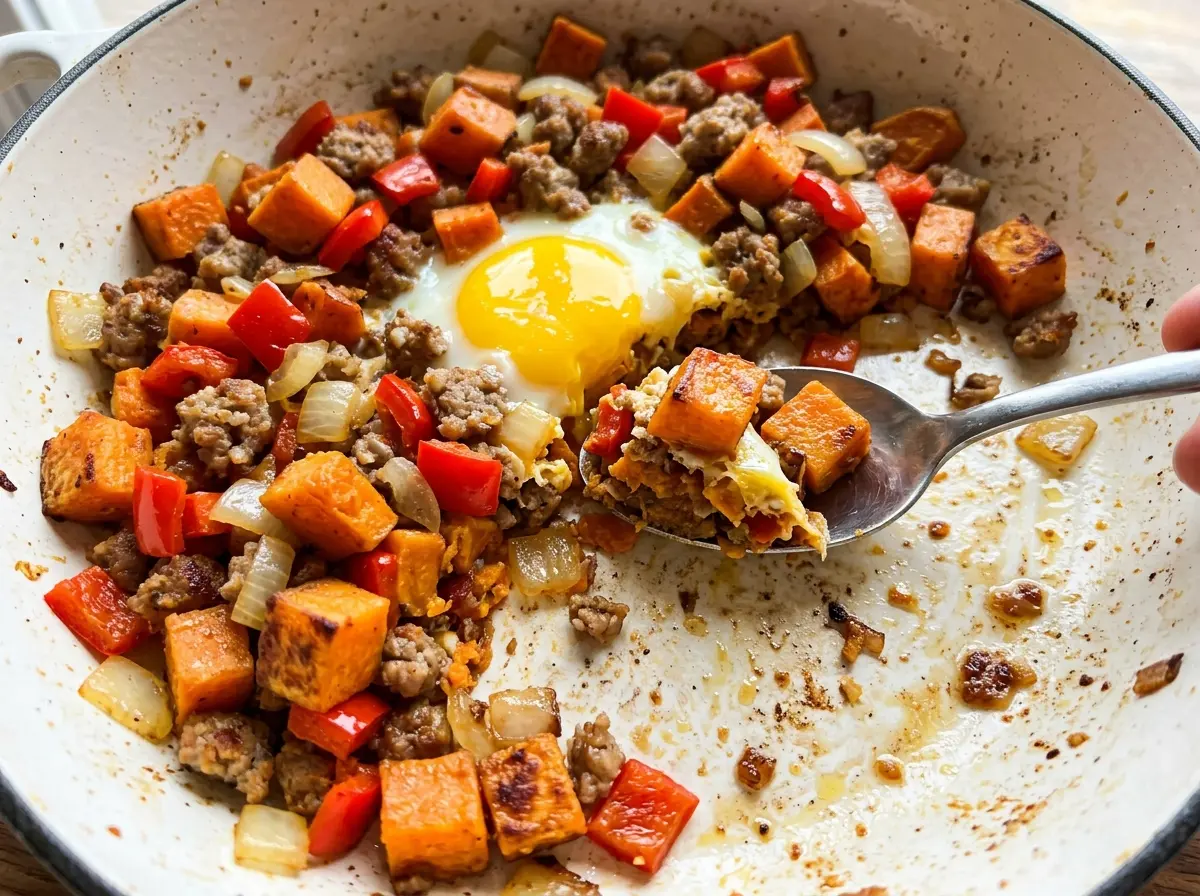
The sausage cooks first, then waits on a plate while the vegetables soften in the same skillet. That keeps the browned bits in the pan and gives the sweet potatoes room to cook before the sausage goes back in. Crack the eggs into wells at the end, cover the skillet, and let the whites and yolks set right on top of the hash. The finished skillet has tender cubes, crisped edges, savory sausage, and eggs ready to scoop up with every serving.
Kitchen Note
Take the sausage out once it’s browned instead of leaving it in the skillet while the sweet potatoes cook. It stays tender, and you can stir it back in just before adding the eggs.
Save this Sweet Potato Breakfast Hash for a skillet breakfast with browned sausage, tender sweet potatoes, and eggs cooked right in the pan.
Why the Sweet Potatoes Need a Covered Phase Before They Brown
Sweet potatoes need time for their centers to turn tender, but leaving them uncovered for that whole stretch can work against you. The skillet’s heat browns the surfaces while the inside is still firm, and the onion and pepper can cook down before the potatoes are ready. The covered phase solves that mismatch: the water creates steam so the cubes soften before you ask them to take on color.
Then uncover the skillet and give the water time to evaporate. That change matters. While the pan is covered, the vegetables soften; once it’s uncovered, the moisture cooks off and the potatoes can start browning instead of sitting in a steamy layer. Stir only once during the covered cook, then occasionally after uncovering, so the cubes have time against the hot skillet. If you rush straight from the covered stage to the eggs, you’ll miss the chance to let the water disappear and the edges begin to brown. This two-part cook is what gives the hash tender centers without sacrificing those browned bits.
What the Sausage, Sweet Potatoes, and Eggs Each Bring to the Skillet

- Bulk breakfast sausage — Bulk sausage breaks into small crumbles that spread through the vegetables. If you only have links, remove their casings and crumble the meat before cooking; links left whole won’t distribute the same way. A familiar grocery-store brand works well here.
- Sweet potatoes — Their natural sweetness balances the savory sausage, and peeling them helps the cubes cook evenly. Cut them into uniform 1/2-inch pieces so they soften at roughly the same pace. A regular potato will work as a swap, but it makes the hash less sweet and more savory.
- Yellow onion and red bell pepper — These soften into the hash and add sweetness and a little freshness alongside the sausage. A green bell pepper is an easy swap if that’s what’s in the crisper; it tastes more vegetal and less sweet. Keep the pieces close in size to help them cook evenly.
- Smoked paprika — It brings a gentle smoky note without adding heat. Regular paprika can stand in, though you’ll lose that smoky edge; there’s no need to buy a specialty brand for this skillet.
- Large eggs — Large eggs fit the wells comfortably and give each serving a substantial egg on top. Smaller eggs will cook in the same wells but may leave more of the hash exposed.
How to Soften the Potatoes, Brown the Edges, and Set the Eggs
Brown the Sausage, Then Set It Aside
Heat the olive oil in a 12-inch skillet over medium heat, then add the bulk sausage. Break it into small pieces as it cooks, stirring and turning the crumbles so they brown instead of forming one large piece. Cook for 6 to 8 minutes, until browned and cooked to 160°F. Transfer it to a plate; the skillet and its browned bits are ready for the vegetables.
Give the Vegetables Their First Five Minutes
Add the sweet potatoes, onion, red bell pepper, kosher salt, black pepper, and smoked paprika to the same skillet. Cook over medium heat for 5 minutes, stirring occasionally so the seasoning coats the vegetables and nothing sits in one spot for too long. The potatoes won’t be tender yet, so don’t wait for a fork to slide through at this stage. Keep the pieces moving now and save the longer, covered cook for the next step.
Cover the Skillet Until a Fork Slides In Easily
Pour in the water and cover the skillet. Cook for 8 to 12 minutes, stirring once halfway through, until the sweet potatoes are easily pierced with a fork. Lift the lid carefully, since steam gathers underneath it. If the centers still resist the fork, they need more time in this covered stage rather than extra uncovered browning.
Evaporate the Water Before Adding the Eggs
Uncover the skillet and cook for 3 to 5 minutes, stirring occasionally, until the water has evaporated and the sweet potatoes begin to brown. Stir the reserved sausage back in, then use a spoon to make four wells in the hash. Crack an egg into each well, cover, and cook over medium-low heat for 5 to 8 minutes, until both the whites and yolks are firm. Keep the heat at medium-low so the bottoms of the potatoes don’t scorch while the eggs finish cooking.
Three Ways to Change Up This Sweet Potato Breakfast Hash
Make It Vegetarian With Plant-Based Breakfast Sausage
Replace the pork sausage with plant-based bulk breakfast sausage or crumbles. Brown it according to its package directions, transfer it out of the skillet, and continue with the vegetables; the hash stays hearty, though the sausage flavor will be milder and its texture may be softer.
Use Hot Breakfast Sausage for More Heat
Swap in spicy bulk breakfast sausage for the regular sausage. The method stays the same, but the crumbles carry more heat through the whole skillet, so the sweet potatoes taste less sweet by comparison.
Trade Sweet Potatoes for Yukon Golds
Use peeled Yukon Gold potatoes cut into the same-size cubes. They make the skillet more savory and less sweet; check them with a fork during the covered cook because the exact time to tenderness can vary.
Storage and Reheating
- Refrigerator: Refrigerate leftovers within 2 hours and keep them covered for 3 to 4 days. The potatoes soften, and the eggs become firmer as they chill.
- Freezer: The finished hash isn’t ideal for freezing because cooked eggs turn rubbery and the potatoes soften. For better texture, freeze the sausage-and-vegetable hash before adding eggs in an airtight container for up to 2 months.
- Reheating: Warm leftovers in a skillet over medium heat, stirring until they reach 165°F. Avoid prolonged high heat, which can toughen the eggs and make the potatoes break apart.
Questions That Come Up When Making Breakfast Hash
Sweet Potato Breakfast Hash
Ingredients
Equipment
Method
- Heat the olive oil in a 12-inch skillet over medium heat.
- Add the sausage and cook for 6 to 8 minutes, breaking it into small pieces, until browned and cooked to 160°F; transfer to a plate.
- Add the sweet potatoes, onion, bell pepper, salt, black pepper, and smoked paprika to the skillet.
- Cook over medium heat for 5 minutes, stirring occasionally.
- Pour in the water and cover the skillet.
- Cook for 8 to 12 minutes, stirring once halfway through, until the sweet potatoes are easily pierced with a fork.
- Uncover and cook for 3 to 5 minutes, stirring occasionally, until the water has evaporated and the sweet potatoes begin to brown.
- Stir in the sausage.
- Make four wells in the hash and crack an egg into each.
- Cover and cook over medium-low heat for 5 to 8 minutes, until the egg whites and yolks are firm.